

Last Updated: October 23, 2026
Quick Summary
To verify roof cleaning insurance, request a current certificate of insurance sent directly by the carrier, then call the insurer using the number on the certificate to confirm the policy is active and covers roof cleaning. Check that the named insured matches the business and that workers’ compensation covers everyone on your roof.
- Request a current COI sent directly by the agent or carrier, not a photo of an old one.
- Confirm the named insured on the certificate matches the business on the contract and license.
- Call the carrier using the number on the certificate to confirm active status and limits.
- Ask for each subcontractor’s certificate, since a general contractor’s policy often excludes uninsured subs.
- Ask the agent in writing whether the policy covers your specific cleaning method and any height exclusions.
Table of Contents
- Why Verifying Roof Cleaning Insurance Matters
- Step 1: Request Proof of Insurance and a Certificate of Insurance for Roof Cleaning
- Step 2: Read the COI Line by Line
- Step 3: Confirm Roof Cleaning General Liability Insurance Limits
- Step 4: Check Roof Cleaning Workers’ Compensation Insurance and Subcontractor Coverage
- Step 5: Call the Insurance Carrier Directly
- Step 6: Read Exclusions and Endorsements for Cleaning Methods
- Step 7: Ask the Right Questions to Ask a Roof Cleaning Contractor
- Frequently Asked Questions
Why Verifying Roof Cleaning Insurance Matters
A certificate of insurance is only as good as the checks you run on it. That is the uncomfortable truth behind roof cleaning insurance, and it is why we tell every homeowner we work with to verify rather than trust.
Here at JJ’s Elite Softwash, we are fully insured and we expect to be asked for proof. That is how it should work. Many homeowners find that the contractor who “has insurance” cannot produce a current certificate when pressed.
If a contractor hesitates to share a certificate of insurance or an insurer phone number, treat that as a red flag. An uninsured crew on your roof can leave you paying for property damage or bodily injury out of pocket.
Step 1: Request Proof of Insurance and a Certificate of Insurance for Roof Cleaning
Ask for two things in writing: a certificate of insurance for roof cleaning and the contractor’s business license. The COI is a one-page summary from the insurance carrier. It lists the named insured, policy number, coverage types, limits, and effective and expiration dates.
A common mistake is accepting a photo of an old certificate. Request a current COI sent directly by the agent or carrier. Check that the scope of work on the certificate matches roof cleaning, not just general handyman work.
Step 2: Read the COI Line by Line
Read every field on the certificate. A COI is a snapshot, not a guarantee, so the details matter more than the document itself.
Match the Named Insured to the Business
The named insured must match the business name on the contract, the estimate, and the license. If the named insured is a different person or company, ask why. A subcontractor’s policy does not cover the company you hired.
Check Effective and Expiration Dates
Confirm the policy is active on the day of your job. Note the effective date and expiration date. An expired policy means no coverage, even if the contractor says renewal is “in process.”
Step 3: Confirm Roof Cleaning General Liability Insurance Limits
General liability covers third-party liability: property damage and bodily injury caused by the crew. Ask for the policy limits in writing. Low limits may not cover a damaged roof or a injured passerby.
| Coverage Type | What It Covers | What to Confirm |
|---|---|---|
| General liability | Property damage, bodily injury | Policy limits and active dates |
| Workers’ compensation | Crew injuries on the job | Named insured matches business |
| Commercial auto | Vehicle damage on site | Included or excluded |
Step 4: Check Roof Cleaning Workers’ Compensation Insurance and Subcontractor Coverage
Workers’ compensation insurance covers crew injuries on the job. Without it, an injured worker may look to your homeowner policy to pay medical bills and lost wages. That is not a hypothetical: a fall from a ladder or a slip on a wet roof can produce a claim that follows the property owner when the contractor’s coverage is missing or lapsed.
Ask the contractor directly whether the crew members who will be on your roof are employees or subcontractors. The answer changes what you need to verify.
If the Crew Are Employees
Request the workers’ compensation certificate and confirm three things: the named insured matches the business you hired, the policy is active on your scheduled job date, and the coverage includes roof work or work at height. Some policies carry classification codes that exclude roofing or exterior cleaning, so ask the agent to confirm the classification rather than assuming the certificate is enough.
If the Crew Are Subcontractors
This is where most homeowners get exposed. A general contractor’s workers’ compensation policy often excludes subcontractors who do not carry their own coverage.
A common pattern is a general contractor who carries a valid policy but hires day labor or a separate crew to handle the actual roof cleaning. If that crew is injured and uninsured, the claim can land on your homeowner policy.
What to Ask If the Contractor Claims Workers Are Exempt
Some contractors will say their workers are independent contractors, sole proprietors, or family members and therefore exempt from workers’ compensation. Treat that claim as a reason to verify, not a reason to relax. Ask for the subcontractor’s certificate anyway. If the contractor cannot produce one, ask the agent whether the policy extends to uninsured subcontractors. Many do not.
If a contractor says the crew is exempt from workers’ compensation and cannot produce a certificate for every person who will be on your roof, treat that as a coverage gap. An injured uninsured worker on your property can create liability for you as the homeowner.
Confirm Coverage Applies to Work at Height
Roof cleaning involves ladders, roof access, and working at height. Ask the agent whether the workers’ compensation policy covers roof work specifically, and whether any height-related exclusions apply. A policy that covers general exterior cleaning but excludes roof access leaves the most dangerous part of the job uninsured.
Step 5: Call the Insurance Carrier Directly
Call the insurance agent or carrier using the number on the certificate, not a number the contractor gives you. Ask three questions: Is the policy active today? What are the coverage limits?
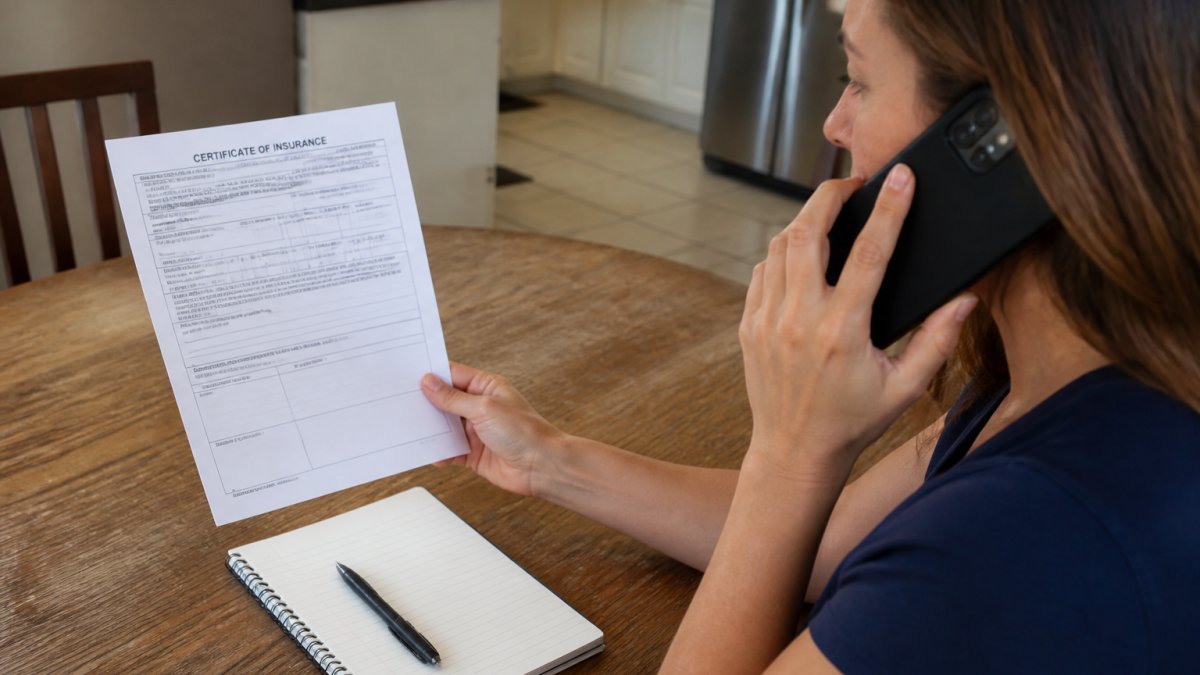
Direct confirmation beats any paper document. The Insurance Information Institute guide to understanding your insurance explains how policy status and coverage work. Ask the agent to email confirmation of active policy status.
Write down the agent’s name, the date, and the time of your call. If a dispute arises later, that note is your proof that you did the check.
Step 6: Read Exclusions and Endorsements for Cleaning Methods
Exclusions and endorsements decide what a policy will not pay for, and they are where roof cleaning coverage most often breaks down. A certificate of insurance shows limits and dates, but it does not show the exclusions buried in the policy form. That is why reading the exclusions matters as much as reading the certificate.
Exclusions That Commonly Affect Roof Cleaning
Ask the agent to confirm whether the policy excludes or limits any of the following:
- Pressure washing or power washing. Some general liability policies exclude pressure washing because of the water damage and overspray risk. If the contractor uses pressure washing as part of the cleaning method, confirm the policy covers it.
- Chemical treatment and soft washing. Soft washing relies on chemical solutions that can damage landscaping, siding, and gutters if misapplied. Confirm the policy covers chemical application and any resulting damage.
- Roof access and work at height. A policy may cover general exterior cleaning but exclude roof access or work above a certain height. Ask the agent whether roof walking and ladder work are covered.
- Water intrusion and interior damage. Overspray or water intrusion that damages interior ceilings and walls may be excluded or sublimited. Ask how the policy treats water damage originating from exterior cleaning.
- Damage to the surface being cleaned. Some policies exclude damage to the property being worked on, which can leave you without recourse if the cleaning method damages shingles or tiles.
What an Endorsement Can Do
An endorsement is a written change to the policy that adds, removes, or limits coverage. A contractor may carry an endorsement that adds pressure washing coverage, or one that excludes roof access. Ask the agent to identify each endorsement on the policy and explain what it changes. If the contractor cannot tell you which endorsements apply, ask the agent directly.
How to Confirm Coverage for Your Specific Job
The certificate alone will not tell you whether pressure washing or chemical treatment is covered. Ask the agent two questions in writing: Does this policy cover the specific cleaning method the contractor will use on my roof, and are there any exclusions for roof access, height, or chemical application? Request the answer by email so you have a record.
Ask the contractor which cleaning method will be used before you call the agent. Pressure washing, soft washing, and chemical treatment carry different risk profiles, and the agent’s answer depends on the method.
When the Certificate Is Not Enough
If the agent cannot confirm coverage for your cleaning method, or if the policy carries an exclusion that leaves your job exposed, ask the contractor to request a policy endorsement or a written coverage confirmation from the carrier before work begins. The National Association of Insurance Commissioners consumer resources explains how exclusions and endorsements change a policy and why the certificate alone does not tell the full story.
Step 7: Ask the Right Questions to Ask a Roof Cleaning Contractor
Use this checklist before you hire. It turns the steps above into a short script.
- Can you send a current COI from your carrier?
- Does the named insured match your business name?
- What are your general liability limits?
- Do you carry workers’ compensation for your crew?
- Are subcontractors used, and are they insured?
- Does your policy cover pressure washing and chemical treatment?
Ask these questions to ask a roof cleaning contractor in writing. A professional crew answers without hesitation. Homeowners in HOA-governed communities also find that a documented insurance check satisfies board requests.
Verification is a five-minute phone call plus a checklist. It protects your roof, your wallet, and your liability.
Frequently Asked Questions
Does a certificate of insurance guarantee a roof cleaning contractor is covered?
No. A COI is a snapshot, not a guarantee. It shows what coverage existed on the date it was issued, but the policy can be canceled or expire the next day. That is why you should call the insurance carrier or agent listed on the certificate to confirm the policy is still active, the dates are current, and the coverage limits match what the contractor told you. Treat the COI as a starting point for roof cleaning insurance verification, not the final word.
How can I look up whether a roof cleaning business has insurance?
There is no public national database that shows a contractor’s insurance status. The reliable path is to ask the contractor for a certificate of insurance, then call the carrier or agent listed on it. Give them the policy number and named insured, and ask whether the policy is active, what the general liability and workers’ compensation limits are, and whether roof cleaning work is covered. You can also check state licensing records, since some states require proof of insurance to hold a contractor license.
What insurance should a roof cleaning contractor carry?
At minimum, ask for roof cleaning general liability insurance covering third-party bodily injury and property damage, plus roof cleaning workers’ compensation insurance if the company has employees. General liability protects your home if the crew damages shingles, gutters, or landscaping. Workers’ compensation covers crew injuries so you are not exposed to a claim. Ask about the policy limits, whether subcontractors are covered, and whether soft washing or chemical treatment is excluded from the policy.
Does roof cleaning insurance cover damage to my roof or property?
It can, but only if the damage falls within the policy’s coverage and is not excluded. General liability typically responds to third-party property damage the contractor causes, such as cracked tiles, broken gutters, or chemical stains on siding. Read the exclusions and endorsements, because some policies exclude certain cleaning methods, pressure washing above a set pressure, or damage from chemicals. If the COI or policy wording is unclear, ask the carrier directly before work begins.
Roof cleaning insurance is not paperwork to skim. It is the difference between a protected home and a claim on your policy. At JJ’s Elite Softwash, we are fully insured, locally owned, and use safe, damage-free soft washing on roofs, gutters, solar panels, and pavers. Get a free estimate and ask us for our certificate of insurance before we start.

