

Last Updated: October 25, 2026
Quick Summary
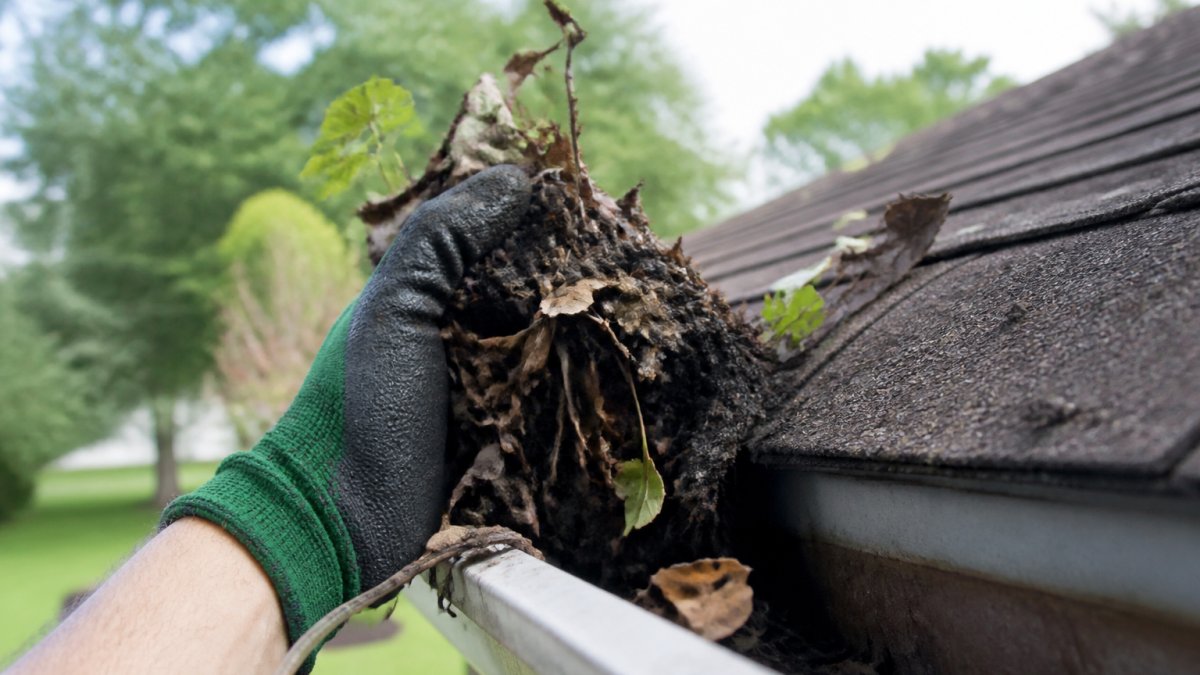
Annual gutter cleaning is the once-a-year removal of leaves, debris, and blockages from your gutters and downspouts so rainwater can flow away from your home. It protects your foundation, roof, siding, and landscaping from water damage and is the cheapest form of home protection there is.
- Clogged gutters overflow and pool water next to the house, which puts pressure on foundation walls and causes cracks.
- Keep downspouts carrying water at least a few feet from the foundation to protect your home.
- Twice a year, in spring and late fall, is the standard schedule for most homes.
- Pines or oaks within roughly 30 feet of the roofline call for at least twice a year plus a mid-season check.
- Gutter guards reduce large debris but do not eliminate cleaning, so periodic inspection is still recommended.
Table of Contents
- Why Annual Gutter Cleaning Protects Your Biggest Investment
- Benefit 1: Preventing Foundation Damage and Water Pooling
- Benefit 2: Protecting Your Roof From Leaks and Deterioration
- Benefit 3: Shielding Siding, Exterior Walls, and Landscaping
- How Often to Clean Gutters: Finding Your Home’s Schedule
- Clogged Gutter Damage: What Happens When You Skip a Year
- Your Gutter Maintenance Checklist for Every Season
- Professional Gutter Cleaning Services: Safety, Scope, and Cost
- Frequently Asked Questions
Why Annual Gutter Cleaning Protects Your Biggest Investment
Annual gutter cleaning is the once-a-year removal of leaves, debris, and blockages from your gutters and downspouts so rainwater can flow away from your home. It’s the cheapest form of home protection there is.
Here’s the part most homeowners get wrong. Your gutter system is not decoration. It’s the drainage system for your entire roof, and it either moves water away from the house or dumps it against it.
When gutters work, rainwater runs to the downspouts and away from your foundation. When they don’t, water spills over the edge and lands right where you don’t want it. According to the National Association of Home Builders, gutters are one of the most overlooked parts of routine home maintenance, even though they protect the structure below.
So what do you actually get from annual gutter cleaning? Seven benefits, and each one saves you money down the road.
Benefit 1: Preventing Foundation Damage and Water Pooling
The number one benefit of annual gutter cleaning is foundation protection. When gutters clog, rainwater overflows and pools next to the house. That standing water soaks into the soil around your foundation.
Over time, wet soil expands and dries out, and that cycle puts pressure on foundation walls. Small cracks turn into bigger ones. Water finds its way into basements and crawl spaces.
A clean gutter system sends that water to the downspouts instead. The fix is simple: keep the water flowing and keep it away from the house. We recommend checking that downspouts carry water at least a few feet from the foundation. That one detail does more for your home than almost anything else on this list.
Benefit 2: Protecting Your Roof From Leaks and Deterioration
Clogged gutters don’t just fail to drain water. They trap it against your roof. When leaves and debris pile up, moisture sits at the roof edge and rots the fascia board behind the gutter.
That’s where roof leaks start. Water backs up under the shingles, works into the decking, and shows up as a stain on your ceiling weeks later.
Regular gutter maintenance also extends the life of your roof. The Asphalt Roofing Manufacturers Association notes that proper drainage is a key part of roof longevity, because trapped water breaks down roofing materials faster than anything else. A roof that drains well lasts longer. It’s that simple.
Benefit 3: Shielding Siding, Exterior Walls, and Landscaping
Water that spills over clogged gutters runs straight down your siding. It streaks the paint, stains the exterior walls, and seeps behind the panels. In cold snaps, that trapped moisture freezes and cracks the siding.
The ground takes a beating too. Overflow from blocked gutters carves channels through mulch beds, washes away soil, and drowns plants. That’s soil erosion, and it’s expensive to fix once it starts.
Clean gutters keep rainwater moving through the downspouts and away from your landscaping. Your beds stay put, your siding stays dry, and your home exterior keeps its curb appeal. For HOA communities, that matters even more, since exterior appearance is often part of the rules.
How Often to Clean Gutters: Finding Your Home’s Schedule
Twice a year is the standard answer for most homes: once in spring and once in late fall. But the honest answer is that annual cleaning is a floor, not a ceiling.
Tree cover and species. Deciduous trees drop leaves in a concentrated window, usually four to six weeks in fall. Pine trees are different: they shed needles continuously, and those needles mat down into a dense layer that blocks water flow even when the gutter looks clear from the ground. Oaks hold dead leaves through winter and release them in spring, which means a fall-only cleaning misses the second drop. If you have pines or oaks within roughly 30 feet of the roofline, plan on at least twice a year plus a mid-season check.
Roof pitch and gutter run. Steeper roofs shed debris faster into the gutters, and long uninterrupted gutter runs concentrate flow at the downspout outlets. Homes with complex rooflines, valleys, or multiple stories accumulate debris in specific low-flow sections first.
Local rainfall intensity. A region that gets most of its rain in short, heavy bursts puts more stress on the system than one with steady light rain. After any storm that produces visible overflow, check the gutters rather than waiting for the calendar.
Gutter guards. Guards reduce large debris but do not eliminate cleaning. Fine grit, shingle granules, and small seeds still pass through or collect on top. Most manufacturers still recommend periodic inspection, and a guard that is never checked can hide a blockage underneath.
Annual cleaning is not enough when you have heavy pine or oak cover, a history of overflow after storms, or gutters that have gone more than 12 months without service. In those cases, a twice-yearly schedule is the minimum, and quarterly checks during fall are common.
A practical rule: walk the perimeter after the first heavy fall rain. If water is spilling over the edge anywhere, your schedule is behind. If you would rather not track it yourself, our service plans set a recurring schedule based on your tree cover and roof layout.
Whether once a year is enough depends on a few variables the article says generic schedules ignore.
| Factor | What to know | Effect on schedule |
|---|---|---|
| Deciduous trees | Drop leaves in a concentrated four to six week window in fall | Standard spring and late fall cleaning |
| Pine trees | Shed needles continuously that mat into a dense layer | At least twice a year plus a mid-season check |
| Oaks | Hold dead leaves through winter and release them in spring | Fall-only cleaning misses the second drop |
| Trees within roughly 30 feet | Pines or oaks near the roofline | At least twice a year plus a mid-season check |
| Roof pitch and gutter run | Steep roofs shed faster; long runs concentrate flow | Low-flow sections need attention first |
| Local rainfall intensity | Short, heavy bursts stress the system more | Check after any storm with visible overflow |
| Gutter guards | Reduce large debris but do not eliminate cleaning | Periodic inspection still recommended |
Clogged Gutter Damage: What Happens When You Skip a Year
Skipping one year of cleaning rarely causes instant damage. But it starts a chain reaction. Blockages build, water backs up, and the problems stack.
Here’s what clogged gutter damage looks like over time:
- Roof leaks that stain ceilings and rot decking
- Foundation cracks from water pooling at the base
- Mold and mildew growth in damp basements and crawl spaces
- Rotted fascia and soffit behind the gutters
- Erosion that washes out landscaping beds
- Insect and pest nests in standing water and debris
None of these are cheap to fix. A little prevention goes a long way. If you’ve already skipped a season, our FAQs cover the most common gutter maintenance questions homeowners ask.
Your Gutter Maintenance Checklist for Every Season
Use this gutter maintenance checklist to stay ahead of blockages between professional cleanings:
- Look at the gutters from the ground after heavy rain. Water should flow, not spill.
- Check for sagging sections or gutters pulling away from the roofline.
- Look for stains on siding below the gutters, a sign of overflow.
- Watch the downspouts during rain. No water out the bottom means a blockage.
- Clear debris from the top of downspouts by hand.
- Check for rust, cracks, or loose hangers.
- Trim branches back from the roofline.
- Look for granules from shingles in the gutters, a sign of roof wear.
Signs you need attention between cleanings include water spilling over the edge, plants growing in the gutters, and birds or insects nesting near the roofline. Catch these early and you avoid bigger repairs.
Professional Gutter Cleaning Services: Safety, Scope, and Cost
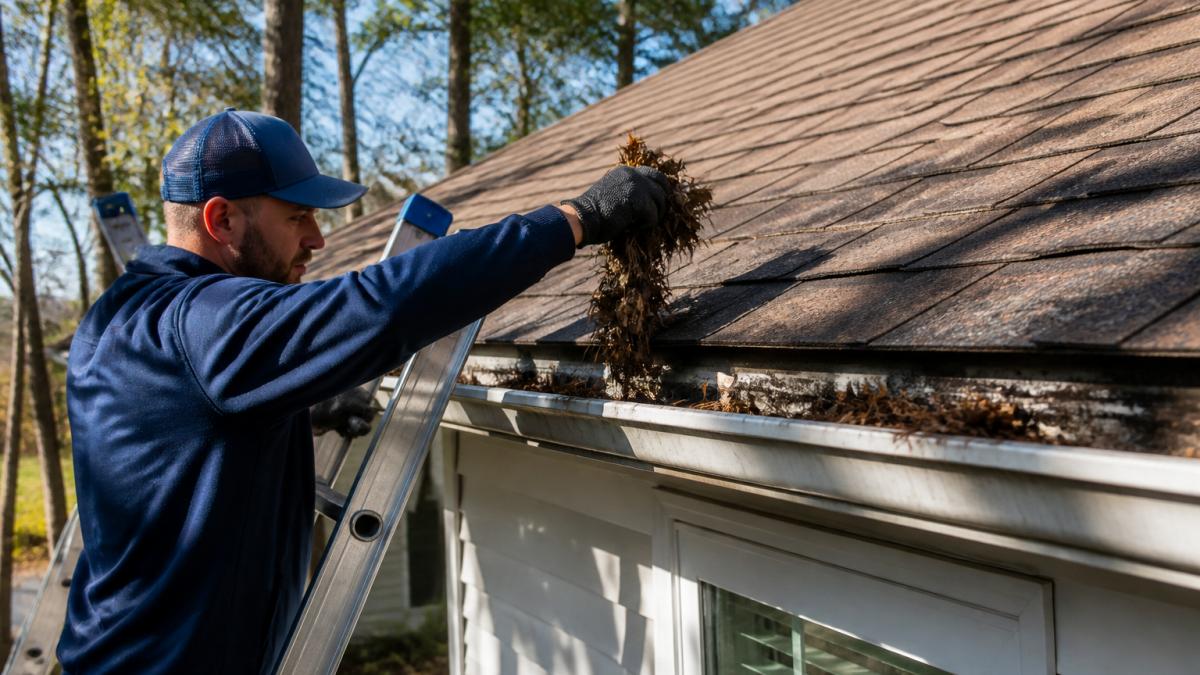
Here is the honest truth about DIY gutter cleaning: ladders are dangerous. Falls from ladders send thousands of homeowners to emergency rooms every year, and gutter work combines the worst factors, height, uneven footing, and reaching away from the ladder.
What annual cleaning includes. A thorough service typically covers full removal of debris from gutters and downspouts, a flow test at each downspout outlet, a visual check of hangers, joints, and fascia, and bagging or hauling away the debris.
What it does not include. Gutter repairs, resealing joints, re-pitching sagging sections, replacing hangers, and roof work are separate jobs. Any provider should tell you that up front rather than bundling surprise charges.
Cost ranges. Pricing varies by home size, gutter length, stories, and how clogged the system is.
Ask three questions before booking: Is the company insured? Does the quote include downspout flushing and debris haul-away? What happens if they find a loose hanger or a separated joint while they are up there?
Avoided repair costs. The financial case for annual cleaning is not the cleaning price, it is the repair bill you avoid. Foundation crack repair, fascia and soffit replacement, and roof decking repairs each typically cost far more than a routine cleaning. One skipped year rarely causes instant damage, but two or three in a row is where the expensive problems start.
As a fully insured, locally owned team, we treat your home like our own. Take a look at our gutter cleaning services, or Get a Free Estimate when you are ready. You can also read about how a free exterior cleaning quote works before you decide.
Frequently Asked Questions
Should you get your gutters cleaned every year?
For most homes, once a year is the minimum, and twice a year is safer if you have overhanging trees. Annual gutter cleaning clears leaves and debris before they block the downspouts and cause overflow. Homes surrounded by pines or near heavy tree cover often need a spring and fall visit. A quick inspection after major storms also helps catch problems between scheduled cleanings.
What damage can clogged gutters cause?
When gutters clog, rainwater spills over the sides instead of flowing through the downspouts. That overflow soaks the soil around your foundation, which can lead to cracks and water in the basement. It also stains siding, rots fascia boards, and can back water up under roof shingles. Clogged gutter damage often shows up as mold, mildew, and soil erosion long before you notice a leak inside the house.
Can you clean gutters yourself or should you hire a professional?
Cleaning gutters yourself is possible on a single-story home with stable ground, but ladder work carries real fall risk. Professional gutter cleaning services handle the ladder work, flush the downspouts, and check for loose hangers or leaks while they are up there. If your home is two stories or taller, has steep roof pitches, or sits on uneven ground, hiring a fully insured crew is the safer choice.
How much does professional gutter cleaning cost?
Pricing for gutter cleaning depends on the length of your gutter run, the number of stories, how clogged the system is, and whether you add services like downspout flushing. Rather than quote a flat number, most local companies give an estimate based on your home. Get a Free Estimate so you know the scope and price before any work begins.
Your gutters are working right now, or they’re quietly costing you money. If it’s been more than a year since your last cleaning, don’t wait for the next storm to find out which one it is. JJ’s Elite Softwash offers safe, damage-free gutter cleaning, roof soft washing, and full exterior cleaning for homes and businesses. We’re locally owned, fully insured, and we show up when we say we will. Get started with JJ’s Elite Softwash and protect your home before the damage starts.

