

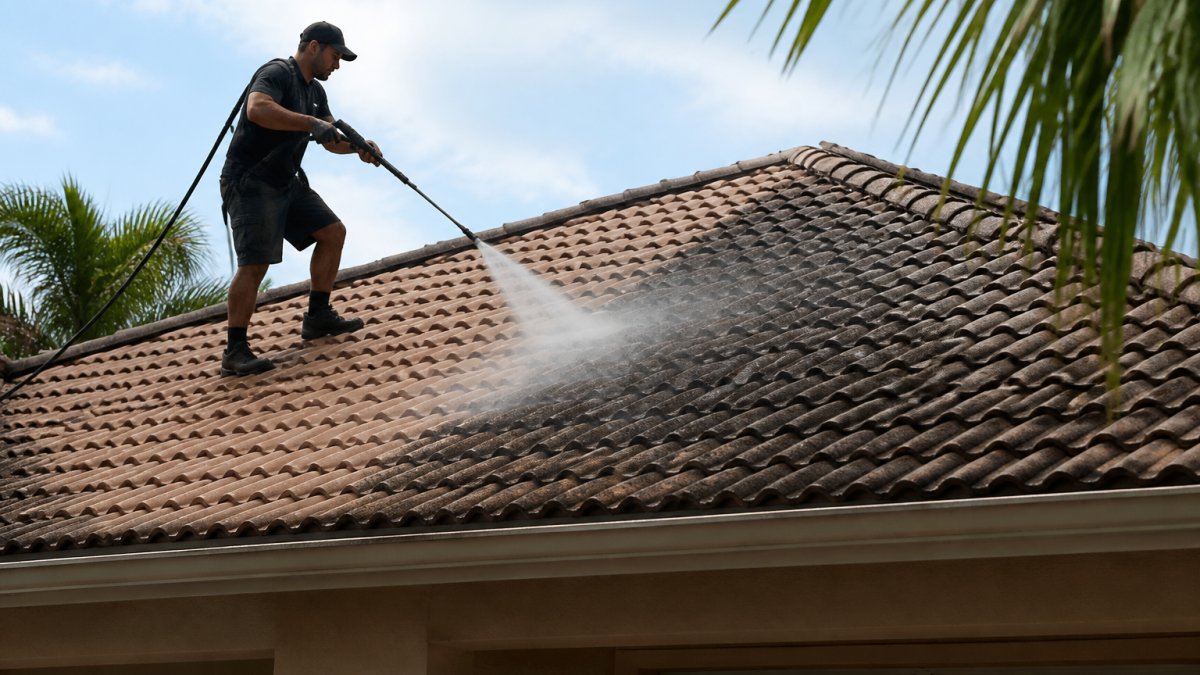
Last Updated: November 1, 2026
Quick Summary
Professional roof stain removal is worth it when the roof is sound and the staining is surface-level, such as algae streaks on firm shingles. If moss, lichen, soft decking, or active leaks are present, repair or replacement should come before cleaning.
- Dark vertical streaks are usually gloeocapsa magma algae, not dirt or pollution.
- Moss and lichen grow rhizoids that lift shingle edges and let water underneath.
- Ask contractors to itemize quotes into assessment, method, labor and safety, and cleanup.
- High pressure strips protective granules, so shingles should be cleaned with low-pressure soft washing.
- Untreated roofs in shady, humid spots may show faint new streaks within the first year.
Table of Contents
- Roof Stains: Cosmetic Problem or Warning Sign?
- What Professional Roof Cleaning Cost Actually Buys You
- DIY vs. Professional Roof Cleaning: Risks, Results, and Real Savings
- Why Soft Wash Roof Cleaning Beats Pressure Washing on Shingles
- How Long Does Roof Cleaning Last, and What Shortens It?
- Cleaning, Repairing, or Replacing: A Decision Framework
- How to Vet a Roof-Cleaning Contractor Before You Book
- Get a Free Estimate and See What Your Roof Actually Needs
- Frequently Asked Questions
Roof Stains: Cosmetic Problem or Warning Sign?
If you have ever wondered whether professional roof stain removal is worth it, the honest answer is: it depends on what those dark streaks actually are.
Roof stain removal is the process of eliminating discoloration on shingles caused by algae, moss, lichen, or dirt without damaging the roof surface.
Most guides get this wrong: they treat every stain as cosmetic or every stain as damage.
When Staining Is Only Surface Deep
Dark streaks that run in vertical lines down a sloped roof are usually gloeocapsa magma, a type of algae that feeds on the limestone filler in asphalt shingles.
A common mistake is assuming those streaks are dirt or pollution. They are not.
If the shingles still feel firm and granular when you press on them, and you see no curling or missing tabs, the staining is likely cosmetic.
When Stains Signal Shingle Damage
Moss and lichen are the warning signs. Both grow roots, called rhizoids, that work their way under shingle edges and lift them. Once that happens, water gets underneath, and water underneath a shingle is how you end up with rotted decking and interior leaks.
- Shingles that feel soft, spongy, or brittle to the touch
- Granules collecting in gutters or at the base of downspouts
- Curled, cracked, or missing shingle tabs
If you spot any of these, cleaning alone will not solve the problem. You are now in repair territory, and the roof inspection should come before the cleaning quote.
What Professional Roof Cleaning Cost Actually Buys You
Professional roof cleaning cost varies by roof size, pitch, material, and how established the growth is. Pricing depends on these factors, so the most accurate figure comes from an on-site quote. Visit our website for current pricing or to request an estimate.
Realistic Price Ranges by Roof Size
Most residential roof cleaning falls into these bands. Treat them as planning ranges, not quotes:
- Small or simple roof (roughly under 1,500 sq ft of roof area): commonly in the low hundreds of dollars for a straightforward soft wash.
- Average single-family roof (roughly 1,500-2,500 sq ft): the middle of the market, typically a few hundred dollars.
- Large or complex roof (2,500+ sq ft, multiple planes, steep pitch, dormers): the upper hundreds and into four figures when access is difficult or growth is heavy.
The lowest quote is often low because it skips the assessment, landscaping protection, and runoff control, which are not optional on a roof that drains over your plants, driveway, and neighbor’s yard.
What the Price Is Actually Made Of
What you are paying for breaks down into four real components:
- Assessment, identifying whether the stains are algae, moss, lichen, or something else, and whether the roof can safely be cleaned
- Method selection, matching the cleaning approach to your shingle type rather than blasting everything the same way
- Labor and safety, the crew, the fall protection, and the insurance that covers the work
- Cleanup, protecting landscaping, clearing debris, and rinsing runoff properly
Cleaning vs. DIY vs. Repair vs. Replacement: The Money Side by Side
The ‘worth it’ question only makes sense when you compare the alternatives on cost and consequence:
| Option | Typical cost profile | What you get | Main risk |
|---|---|---|---|
| Professional soft wash | A few hundred dollars for an average roof | Stains removed, growth killed at the source, roof surface intact | Paying for cleaning on a roof that actually needs repair |
| DIY product and sprayer | Lowest cash outlay, plus your weekend | Light surface algae knocked back on low, walkable roofs | Fall risk, chemical burn to shingles and plants, incomplete kill and fast regrowth |
| Targeted repair | Mid-range, varies widely with the damage | Fixes lifted shingles, flashing, or localized leaks | Repairing a roof that is too far gone to justify the spend |
| Full replacement | The largest line item by far | A new roof and a fresh lifespan | Spending replacement money when cleaning would have bought years |
Cleaning is generally the lower-cost way to protect a sound roof, repair suits localized damage, and replacement suits a roof at the end of its service life.
Ask every contractor to itemize the quote: assessment, method, labor and safety, and cleanup. If a quote is one number with no scope, you cannot compare it to anything, and you cannot tell what was skipped.
If you want to see how we build an estimate before you commit, our guide on what to expect from a free quote lays out the visit step by step.
DIY vs. Professional Roof Cleaning: Risks, Results, and Real Savings
DIY vs. professional roof cleaning comes down to a simple trade: you save money up front and accept risk you probably cannot see from the ground.
The DIY appeal is obvious. A garden sprayer and a store-bought cleaning product can knock back light algae on a low, walkable roof.
The problems show up in three places:
- Fall risk. A wet, sloped roof is one of the most dangerous surfaces in a home. Roof safety is why this work belongs to people who do it every day.
- Chemical damage. Too strong a mix strips granules and dulls shingles; too weak does nothing. Plants and gutters below take the runoff either way.
- Incomplete results. Algae regrowth starts from the same spores if the treatment does not reach the root and surrounding area.
Professional work brings the equipment, the insurance, and the judgment to know when a roof should not be cleaned at all.
Why Soft Wash Roof Cleaning Beats Pressure Washing on Shingles
Soft wash roof cleaning uses low-pressure application and a cleaning solution rather than force.
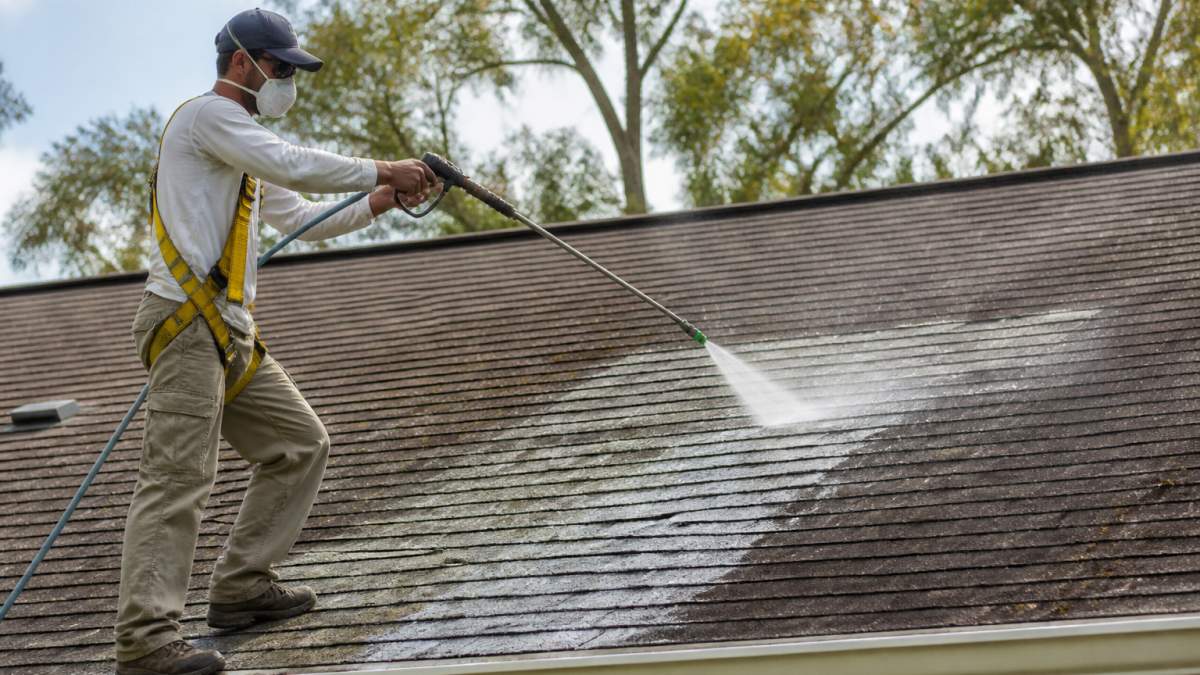
High pressure strips the protective granules off shingles. Those granules help protect shingles from sun and rain, and their loss can contribute to surface wear and leaks.
Low-pressure cleaning reaches the same result without the abrasion. If you want the full picture of how the method works, our guide on what professional soft washing is breaks it down for homeowners.
Watch out: a contractor who offers to “pressure wash” your shingles is telling you something important about how they plan to treat your roof.
How Long Does Roof Cleaning Last, and What Shortens It?
How long roof cleaning lasts depends on factors such as shade, moisture, and tree cover, and regrowth timing varies from roof to roof.
What to Expect, Week by Week and Year by Year
- Immediately after cleaning: the growth is dead and the bulk rinses away. Some staining can look lighter rather than gone, because the shingle surface itself has been discolored over years.
- First one to two weeks: residual staining continues to fade as dead growth weathers off. This is normal, not a sign the job failed.
- Six to twelve months: a clean roof with a protective treatment should still look clean. Untreated roofs in shady, humid spots may show faint new streaks by the end of the first year.
What Actually Shortens the Interval
- Shade, north-facing and tree-covered roofs stay damp longer, which favors algae and moss
- Clogged gutters, backed-up water keeps the roof edge wet and feeds growth near the fascia
- Nearby trees, debris traps moisture and seeds new growth
The Maintenance Schedule That Pays for Itself
Roof maintenance can be planned as a recurring schedule rather than a one-time event.
- Annual: clear debris, check gutters and downspouts, and look for new streaks from the ground.
- Every one to three years: soft wash when growth returns, before it spreads across whole planes.
- After each cleaning: apply a protective treatment to slow recolonization and extend the interval.
- Every few years: have the roof inspected for granule loss, lifted shingles, or soft spots so you catch repair needs early.
Clearing debris, keeping drainage clear, and treating the roof on a sensible cycle costs far less over a decade than repeated deep cleanings or an early replacement.
Photograph your roof from the same two or three spots after each cleaning. Comparing those photos year over year is the fastest way to see whether regrowth is speeding up and whether your maintenance interval needs to tighten.
Cleaning, Repairing, or Replacing: A Decision Framework
Roof condition, not age alone, is a useful basis for deciding between cleaning, repair, and replacement.
| Roof Condition | Recommended Action | Why |
|---|---|---|
| Firm shingles, cosmetic algae streaks only | Clean and apply protective treatment | Staining is surface-level; cleaning restores appearance and slows spread |
| Moss or lichen with lifted edges, granules in gutters | Clean, then inspect for repair | Growth has started working under shingles; catch damage early |
| Soft decking, active leaks, widespread granule loss | Repair or replace before cleaning | Cleaning will not fix structural condition and may hide it |
| Roof near end of lifespan | Get a replacement quote first | Cleaning money is better spent toward a new roof |
The logic is straightforward: cleaning is worth it when the roof is sound and the problem is on the surface. For answers to common questions about roof cleaning, service areas, and estimates, see our Frequently Asked Questions. When the structure is compromised, cleaning is cosmetic spending on a roof that needs more.
How to Vet a Roof-Cleaning Contractor Before You Book
Verifying a contractor is an important step many homeowners skip.
Run through this checklist before anyone gets on your roof:
- Ask for a certificate of insurance and confirm it is current
- Verify the policy covers roof work, not just general liability
- Ask what cleaning method they use on your shingle type
Having the scheduled date and arrival window in writing is worth requesting from any contractor.
For a deeper walkthrough, our guide on how to verify roof cleaning insurance covers the seven steps in detail.
Get a Free Estimate and See What Your Roof Actually Needs
A professional inspection is the most reliable way to answer “is it worth it” for your roof.
Our process is simple: we inspect the roof, identify what is growing on it, and tell you honestly whether cleaning will help or whether you should talk to a roofer first.
When you are ready, you can request a free estimate through our website. We handle roofs, gutters, solar panels, driveways, pool cages, and pavers.
Frequently Asked Questions
Is professional roof stain removal worth the cost?
It depends on what is causing the stain. Dark algae streaks and moss are living growths that hold moisture against shingles and speed up granule loss. Left alone, they shorten roof lifespan and can lead to leaks and rotted decking. Professional roof stain removal is generally a lower-cost step than roof replacement, and it can help protect roof condition. If the staining is purely cosmetic on an otherwise sound roof, cleaning is optional. If growth is spreading, cleaning is the cheaper fix.
How much does professional roof cleaning cost?
Pricing depends on roof size, pitch, material, and how much growth is present, so a firm number requires an on-site quote. Pricing depends on roof size, pitch, material, and the extent of growth. For current pricing, visit our website or request a free estimate. Ask for a written estimate that lists what is included, such as gutter clearing or a protective treatment.
Is it safe to clean roof stains yourself?
Walking a roof is the biggest risk. Falls are a leading cause of home-injury deaths, and a wet, algae-covered shingle surface is slippery even for professionals. Beyond safety, DIY mistakes are common: a pressure washer can strip granules and void shingle warranties, and bleach mixes can kill landscaping or damage metal flashing. A store-bought cleaning product applied from the ground with a garden sprayer is generally considered a safer DIY route than climbing onto the roof.
How long do professional roof cleaning results last?
How long results last depends on shade, humidity, and tree cover, and algae can return at different rates on different roofs. Homes under heavy tree canopy or in consistently damp conditions see regrowth sooner. A protective treatment applied after cleaning can slow algae regrowth and stretch results further. Scheduling a roof inspection every couple of years lets you catch new growth early, when a light cleaning is enough.
Can roof cleaning damage shingles?
Pressure washing can. High-pressure water blasts away the mineral granules that protect asphalt shingles from UV and weather, and that damage is permanent. Soft washing avoids this by using low pressure and a cleaning solution to kill algae and moss at the root. Soft washing uses low pressure, which is generally considered gentler on shingles than high-pressure cleaning. Confirm the contractor uses low-pressure soft washing and ask how they protect plants and gutters during the job.
Cleaning a roof is worth it when the stains are surface-level and the shingles underneath are sound. When they are not, the honest answer is to fix the roof first. JJ’s Elite Softwash inspects before we quote, uses damage-free soft washing on every roof, and carries full insurance so you are never exposed. Get started with JJ’s Elite Softwash and see what your roof actually needs before you spend a dollar on it.

