

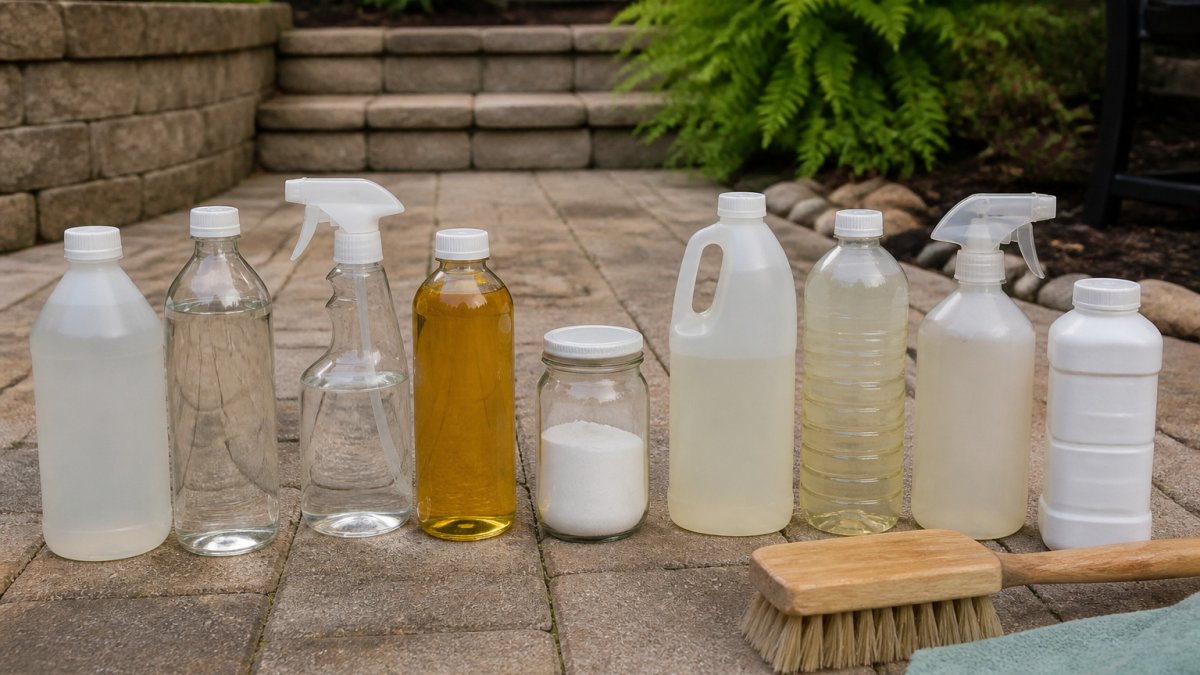
Quick Summary
The best eco-friendly paver cleaner depends on the stain. Distilled white vinegar handles light dirt, oxygen bleach (sodium percarbonate) handles organic stains, and a biodegradable dish soap covers routine surface grime. Avoid chlorine bleach, since its runoff harms aquatic life and nearby plants.
- Oxygen bleach is color-safe and safe for nearby plants, but needs warm water for best results.
- Distilled white vinegar is affordable and non-toxic, but can etch limestone or marble-look pavers.
- Mix biodegradable dish soap at about 1 teaspoon per gallon for light algae on small areas.
- Sweep debris before cleaning and rinse water onto planted areas, never into storm drains.
- Test any cleaner on a small hidden patch first, since natural ingredients can still damage stone.
Table of Contents
- Quick Comparison of the Best Eco-Friendly Paver Cleaners
- How We Evaluated These Eco-Friendly Cleaners
- 1. Distilled White Vinegar and Water for Light Dirt
- 2. Oxygen Bleach and Soda Crystals for Stubborn Organic Stains
- 3. Cleaning Algae Off Pavers Without Harsh Chemicals
- 4. Choosing the Right Paver Cleaning Brush and Tools
- Protecting Joint Sand, Plants and Runoff While You Clean
- Scheduling a Clean or Hiring JJ’s Elite Softwash for Your Patio
- Frequently Asked Questions
Quick Comparison of the Best Eco-Friendly Paver Cleaners
Most eco-friendly paver cleaners do one job well. Vinegar handles light dirt, oxygen bleach handles organic stains, and a plant-based cleaner covers routine upkeep. Pick the one that matches your stain, not the one with the boldest label.
| Cleaner | Starting Price | Best For | Main Drawback |
|---|---|---|---|
| Oxygen Bleach (Sodium Percarbonate) | $10.00 | Organic stains and brightening | Needs warm water for best results |
| Baking Soda | $2.00 | Scrubbing localized spots | Takes real elbow grease |
| Soda Crystals | $5.00 | Greasy, heavily dirty pavers | Irritates skin; wear gloves |
| ECOS All-Purpose Cleaner | $6.00 | Routine maintenance | Weak on heavy moss or lichen |
| Biodegradable Dish Soap | $4.00 | Light dust and surface grime | Not for deep stains |
| Patio Magic Concentrate | $25.00 | Algae and green mold | Needs time to show full results |
| Smart Seal Xtreme Patio Cleaner | $30.00 | Deep-set organic stains on stone | May need agitation |
| Wet & Forget Moss, Mould, Lichen & Algae Remover | $35.00 | Long-term moss and lichen control | Not an instant cleaner |
Pricing for these products varies by retailer, size, and location, so check current prices before you buy.
How We Evaluated These Eco-Friendly Cleaners
We judged each cleaner on four things: how well it removes the stain types it claims to target, how safe it is around plants and pets, how much physical work it takes, and what it costs per job. We also looked at whether the product is biodegradable or plant-based, since that affects runoff.
Eco-friendly does not mean risk-free. A natural ingredient can still damage a sensitive stone or leave a residue, so we flag limits wherever the research points to them. Always test any cleaner on a small hidden patch first.
1. Distilled White Vinegar and Water for Light Dirt
Distilled white vinegar is a low-cost option for light dirt and the mineral film that builds up on pavers over time.
Mix it with water and apply with a soft brush. Rinse thoroughly, because leftover vinegar can leave a smell and, on some natural stones, a dull etch.
Pros: Very affordable, non-toxic, easy to find.
Cons: Strong odor during use. Its acidity can etch certain natural stones, so skip it on limestone or marble-look pavers.
Best for: Homeowners with concrete or clay pavers and light grime.
Skip if: Your patio is natural stone, or you are mainly fighting organic stains.
2. Oxygen Bleach and Soda Crystals for Stubborn Organic Stains
Oxygen bleach (sodium percarbonate) is a non-chlorine option that breaks down into oxygen and water. It is one of the more practical choices for organic stains like leaves and food.
Soda crystals are a stronger natural degreaser and work well on greasy or heavily soiled pavers. Wear gloves, since they can irritate skin.
Pros: Oxygen bleach is color-safe and safe for nearby plants. Soda crystals cut through grease.
Cons: Oxygen bleach needs warm water for best results. Soda crystals demand gloves and careful handling.
Watch out: Never mix soda crystals with other cleaners. Rinse the patio fully before you let plants or pets back on it.
Best for: Organic stains and greasy patios where a gentler product will not cut it.
Skip if: You have sensitive skin and do not want to handle a caustic powder.
3. Cleaning Algae Off Pavers Without Harsh Chemicals
Algae, moss, and lichen grow fastest on shaded, damp pavers, especially north-facing patios, areas under downspouts, and joints that stay wet.
How the main eco-friendly options work
- Sodium percarbonate (oxygen bleach). Breaks down into soda ash, oxygen, and water. It oxidizes the organic film that algae clings to, so it works best on active growth rather than dried black staining. Mix per the label (typically a scoop per gallon of warm water), apply, let dwell 15-30 minutes, then scrub and rinse. It is color-safe on most pavers but can lighten some natural stone, so patch-test first.
- Quaternary ammonium concentrates (Patio Magic, Wet & Forget). These are not instant cleaners. They leave a residual film that inhibits regrowth for weeks to months, and results depend on rain and wind to activate and disperse the product. They are generally non-acidic and biodegradable in the formulated sense, but they are still biocides, keep runoff out of ponds and storm drains.
- Soap-and-water mechanical removal. For light fuzz on a small area, a stiff brush plus a mild biodegradable dish soap solution (about 1 teaspoon per gallon) lifts algae without any biocide. It is the lowest-impact option but the most physical work.
Why bleach is the wrong default
Chlorine bleach is effective and cheap, but it is a poor fit for an eco-conscious patio. Its runoff can harm aquatic life and nearby plants. Near a storm drain or water feature, a non-chlorine product is the safer choice.
Preventing regrowth
Cleaning is only half the job. Algae returns because the conditions that favor it, shade, moisture, and organic debris, remain. After cleaning, sweep leaves and debris regularly, trim back overhanging vegetation to improve airflow and sunlight, and fix gutter or downspout issues that keep one area chronically wet.
Watch out: Never mix bleach with vinegar, ammonia, or other acids, the reaction releases toxic chlorine gas (the CDC). If you are switching products, rinse the surface thoroughly and let it dry before applying a different chemistry.
Best for: Shaded pavers that regrow algae or moss every season, and homeowners who want to keep runoff out of waterways.
Skip if: You need a fast, one-visit clean before an event, none of these options deliver instant results.
4. Choosing the Right Paver Cleaning Brush and Tools
Your cleaner only works as well as the tool you scrub with. A stiff-bristled brush and a bucket are the basics. For larger jobs, a long-handled scrub brush saves your back.
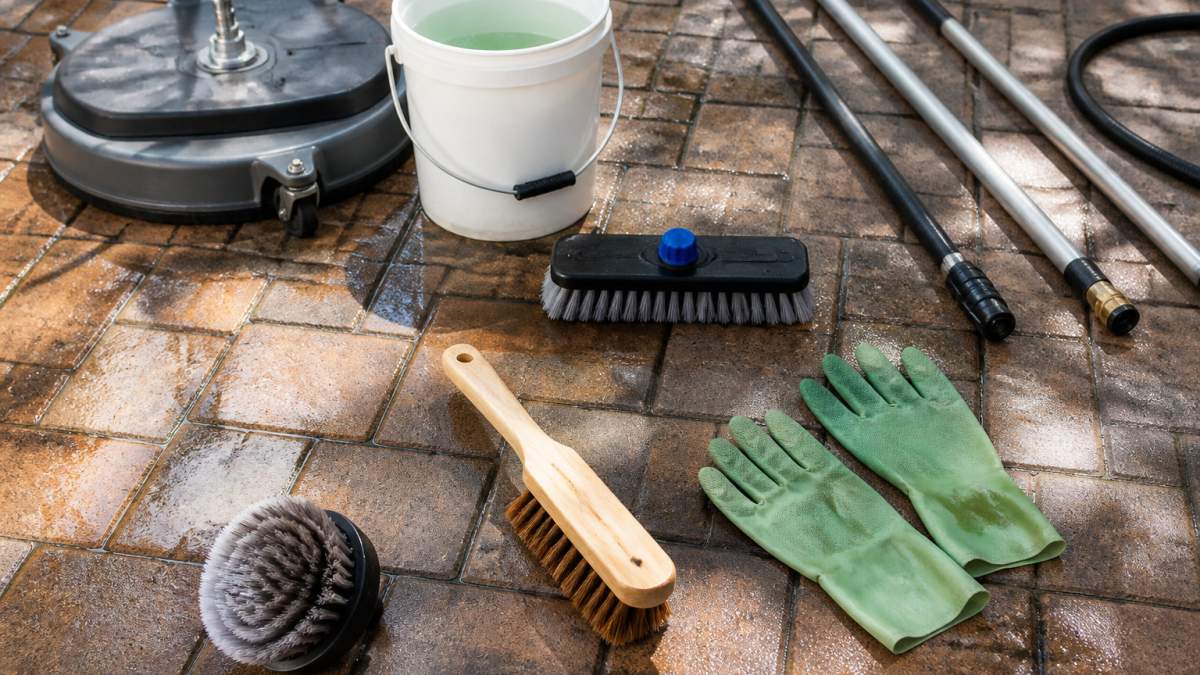
Match the brush to the surface. Stiff bristles suit clay and concrete pavers. Softer bristles are safer on natural stone and on tight joints where sand can wash out.
Baking soda is a gentle option for scrubbing localized spots. It takes real elbow grease, but it is safe for pets and children.
Pros: Cheap, reusable, and effective when paired with the right cleaner.
Cons: Scrubbing is physical work. Aggressive brushes can wear down softer pavers and loosen joint sand.
Protecting Joint Sand, Plants and Runoff While You Clean
Most eco-friendly cleaning advice stops at “use a biodegradable product.” That is not enough. Biodegradability describes what happens to a product over time in a treatment system. It does not by itself address aquatic toxicity or runoff volume.
Joint sand: the most common casualty
Joint sand is what locks pavers together and keeps weeds and water out. It is also the first thing to wash away when you clean too aggressively.
- Polymeric sand is a binder-enhanced sand that cures into a semi-solid joint. It is more resistant to rinse water but can be degraded by strong acids (including vinegar in high concentrations) and by high-pressure washing. Keep pressure low and avoid pooling cleaner in the joints.
- Regular (non-polymeric) joint sand is loose and erodes easily. Even a garden hose at full pressure can channel it out. Use a low-flow setting, direct water across the surface rather than into the joints, and plan to re-sand after the patio dries.
- Signs of sand loss: visible gaps, wobbling pavers, or water pooling in joints instead of draining. If you see these, stop cleaning and re-sand before the next wash.
Plants and landscaping
Pre-wet nearby beds before you start, moist soil dilutes any overspray and reduces uptake by roots. See how professional soft washing protects plants and surfaces. After cleaning, rinse plants with clean water.
Runoff: where eco claims fall short
Even a plant-based cleaner can carry soap, suspended dirt, and algae into storm drains, which in most municipalities discharge untreated to local waterways. A few practical rules:
- Sweep first. Remove leaves, dirt, and debris before any water touches the patio. The less organic load in your rinse water, the less oxygen demand it creates downstream.
- Use the minimum dose. Mix only what the label calls for, more product does not clean faster, it just adds to runoff. For a typical mild soap solution, that means roughly 1 teaspoon per gallon of water, not a generous squeeze.
- Direct rinse water to a planted area, not a drain. Rinse water from a patio can usually be directed onto a lawn or garden bed, where soil and plants filter it. Never hose runoff into a street, gutter, or storm drain.
- Watch the weather. Clean on a dry day with no rain in the forecast for at least 24 hours, so runoff soaks in or evaporates rather than washing into drains.
- Check local rules. Some municipalities restrict what can be discharged to storm drains; if you are using a biocide like a quat-based cleaner, confirm local guidance before rinsing.
Watch out: Do not assume “biodegradable” means “safe for aquatic life.” Some biodegradable surfactants are still toxic to fish at low concentrations.
Best for: Any patio with polymeric or regular joint sand, nearby planting beds, or runoff that reaches a drain or waterway.
Skip if: You are cleaning a small, contained area with plain water and no runoff, but even then, sweep first.
Scheduling a Clean or Hiring JJ’s Elite Softwash for Your Patio
DIY works for light dirt and small spots. For heavy algae, deep stains, or a large patio, a professional crew saves time and avoids the trial and error. JJ’s Elite Softwash provides professional paver cleaning in Lake Mary and nearby Central Florida communities, using safe, damage-free soft washing techniques.
You can review service options to see what paver cleaning includes, or check service plans for the Central Florida area. When you are ready to book, you can reserve a service directly. Before you commit, you can request a free estimate.
Pricing depends on the size of your patio, the stain type, and your schedule, so contact JJ’s Elite Softwash for a current quote.
Frequently Asked Questions
What is the best eco-friendly cleaner for pavers?
For general dirt, a pH-balanced plant-based all-purpose cleaner such as ECOS All-Purpose Cleaner, diluted per the label, works well and rinses cleanly. For organic stains and light brightening, an oxygen bleach such as sodium percarbonate is a stronger choice because it breaks down into oxygen and water. Match the cleaner to the stain, test a small hidden area first, and check that the product is labeled safe for your paver material, whether concrete or natural stone.
Can I clean patio pavers with vinegar and water?
Yes, for light dirt and mineral buildup on most concrete pavers, a solution of distilled white vinegar and water is a low-cost option. Vinegar is acidic, so it can etch some natural stones such as limestone and marble. Use a mild dilution, scrub gently with a brush, rinse thoroughly, and avoid letting it dry on the surface. Pricing for JJ’s Elite Softwash services depends on the size of your patio and the job, so contact the company for a quote.
Is baking soda safe to use on pavers?
Baking soda is non-toxic and gentle, which makes it a useful choice for scrubbing localized spots on pavers. It is a mild abrasive, so it works best with a stiff brush and some physical effort. It will not remove heavy moss or deep organic stains on its own. Test a small area first, rinse the surface well afterward, and keep it away from joint sand where possible so the sand does not wash out.
How do you clean pavers without harming nearby plants?
Choose a biodegradable, non-chlorine cleaner and keep the solution contained to the patio. Pre-wet the surrounding plants with clean water so they are less affected by runoff, then apply the cleaner with a brush or low-pressure sprayer rather than a high-pressure jet. Rinse the pavers with clean water and direct the rinse water onto the lawn or gravel rather than into garden beds. Avoid cleaning on windy days to limit overspray.

