

Last Updated: November 4, 2026
Quick Summary
Cleaning pavers without damaging the surface starts with identifying the material, since concrete, brick, natural stone, and porcelain each react differently to water, cleaners, and pressure. Pre-wet the surface, use a mild detergent or oxygen-based cleaner, scrub with a soft-bristled brush, and rinse at a low angle to protect joint sand.
- Pre-wet dry pavers so cleaner stays on top instead of soaking in.
- Use a soft-bristled brush, never a stiff or wire brush.
- Rinse at a low angle to keep joint sand in place.
- Avoid 0-degree and turbo tips on pavers entirely.
- Mix one part white vinegar with one part water for light jobs.
Table of Contents
- Step 1: Identify Your Paver Material Before Cleaning
- Step 2: Prep the Area and Pre-Wet the Surface
- Step 3: Choose the Right Paver Cleaner for the Job
- Step 4: Scrub Gently and Treat Stains
- How to Clean Patio Pavers Without Removing Sand
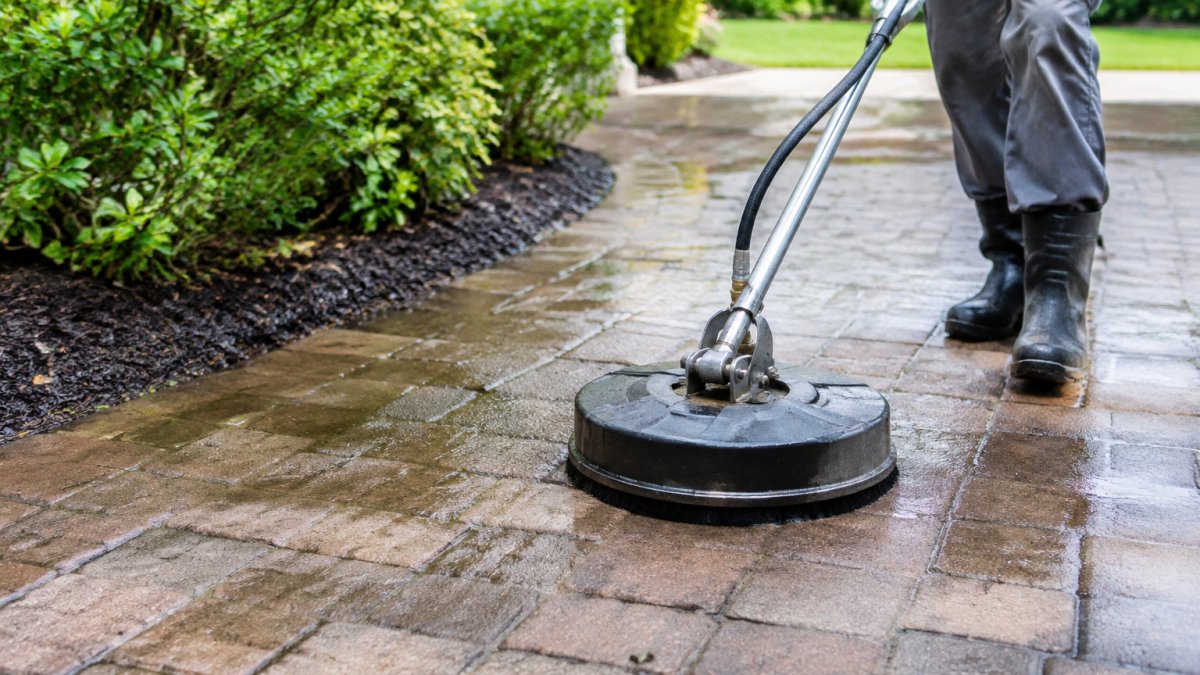
- How to Clean Pavers With Power Washing
- How to Clean Pavers With Vinegar
- Step 5: Rinse, Protect Joint Sand, and Plan for Next Time
- Frequently Asked Questions
Step 1: Identify Your Paver Material Before Cleaning
Concrete pavers, brick pavers, natural stone, and porcelain pavers all react differently to water, cleaners, and pressure. Cleaning pavers without damaging the surface starts with knowing what you’re standing on. A wrong guess can etch, discolor, or strip a finish you can’t get back.
A common mistake is buying a strong cleaner and spraying the whole driveway at once, which can etch the surface in minutes.
So check the material first:
- Concrete pavers: Poured and pressed, usually gray or tinted. They handle mild detergent well but show acid damage fast.
- Brick pavers: Clay-based, often red or brown. They chip and spall under too much pressure.
- Natural stone: Travertine, limestone, and bluestone. These are porous and easy to scar with acid.
- Porcelain pavers: Dense and smooth. They resist stains but can lose their finish with harsh chemicals.
Not sure what you have? Pull up one loose paver or look at the edge of a step. A quick test patch in a hidden corner tells you more than any label.
Step 2: Prep the Area and Pre-Wet the Surface
Sweep or blow away loose debris before anything gets wet. Leaves, dirt, and grit turn into a muddy mess once water hits them, and that mess works its way into the joint sand.
Next, pre-wet the pavers with your garden hose. Why? A dry paver soaks up cleaner like a sponge. That pulls the solution deep into the surface and makes it hard to rinse out. Wetting first keeps the cleaner on top where it can work.
A few prep steps that save trouble later:
- Move furniture, planters, and decor off the patio
- Cover nearby plants or rinse them after
- Check that drains aren’t clogged with debris
- Work in shade or on a cool day so the cleaner doesn’t dry too fast
Watch out: letting cleaner dry on the pavers can leave streaks and burn marks. Keep the area wet and work in small sections.
Step 3: Choose the Right Paver Cleaner for the Job
The right paver cleaner depends on the stain, not the label with the biggest promises. For everyday dirt and grime, a mild detergent and water does the job. For organic buildup like moss, algae, and weeds, an oxygen-based cleaner works well.
Skip the harsh chemicals when you can. Acidic cleaners and stiff wire brushes are the fastest way to etch concrete or scar natural stone. If you want greener options, our guide to eco-friendly cleaners for paver patios covers surface-safe picks.
Match the cleaner to the problem:
- General dirt and grime: mild detergent, dish soap, or a dedicated paver cleaner
- Moss, algae, organic buildup: oxygen bleach or a paver-safe organic cleaner
- Oil stains: a degreaser or poultice made for the paver type
- Efflorescence, the white chalky film: a specialty efflorescence remover, never a wire brush
Always run a test patch first. Apply a small amount, wait a few minutes, and rinse. If the color holds, you’re safe to continue.
Step 4: Scrub Gently and Treat Stains
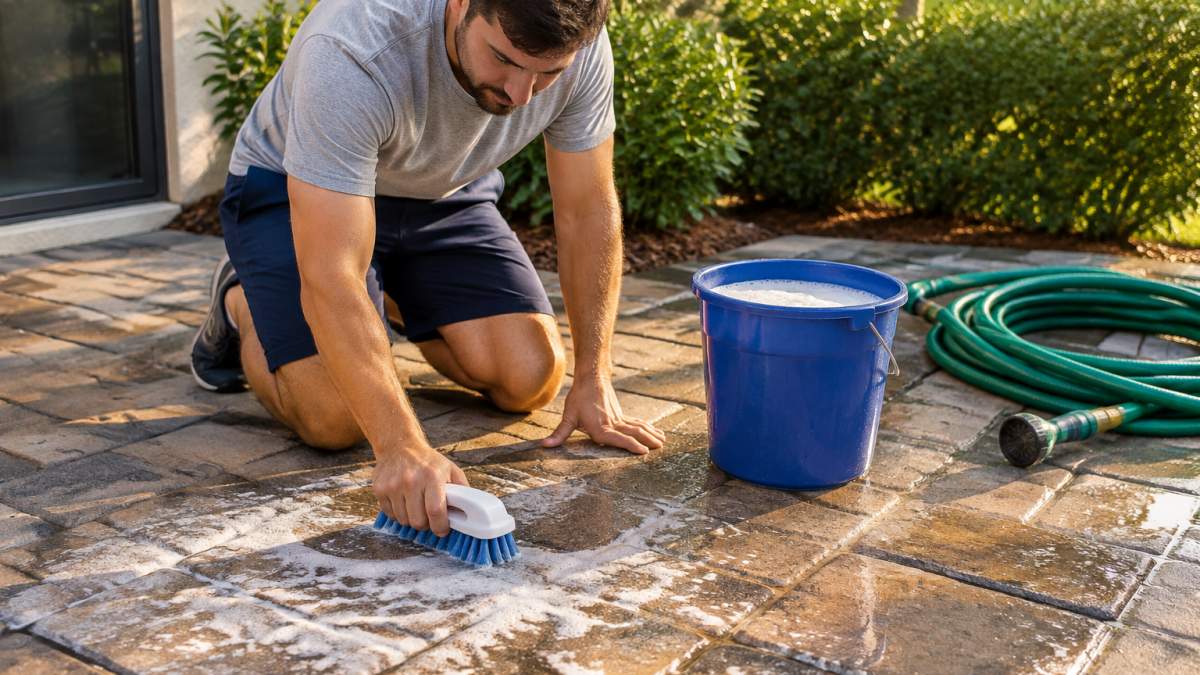
Use a soft-bristled brush, not a stiff brush or wire brush. Work the cleaner into the surface in small circles. Let it sit for the time on the label, then scrub again. Gentle, repeated passes beat one hard scrub every time.
For stains, treat them by type:
| Stain | Treatment | Watch Out For |
|---|---|---|
| Oil or grease | Degreaser or absorbent poultice | Don’t scrub in, lift it out |
| Rust | Oxalic acid spot treatment | Test first; can lighten color |
| Organic (moss, algae) | Oxygen-based cleaner | Keep it wet, don’t let it dry |
| Efflorescence | Specialty remover | Never wire brush the surface |
A common mistake is pouring cleaner straight on a dry stain. Wet the spot first, then apply. That keeps the product working on the stain instead of soaking into the paver.
How to Clean Patio Pavers Without Removing Sand
Joint sand is the weakest point in any paver cleaning job. It locks the units together, keeps weeds from rooting, and channels water off the surface. Blast it out and the patio starts shifting within a season.
Start by knowing what is in the joints. Most residential pavers use polymeric sand, which hardens after wetting and resists erosion, or a washed concrete sand in older or natural-stone installations. Polymeric joints tolerate a gentle rinse but fail fast under a narrow pressure tip.
Before any water hits the surface, check joint depth. Before any water hits the surface, check joint depth and look for wide gaps or missing sand.
Protect the joints during cleaning with these habits:
- Rinse at a low angle, sweeping water across the surface rather than driving it straight down into the seams.
- Keep the spray pattern wide and the nozzle moving; never hold it in one spot over a joint.
- Skip the surface cleaner on fresh polymeric sand, since the spinning jets concentrate force at the seams.
- Work in small sections and rinse before the cleaner dries, so you are not tempted to blast a stubborn spot.
- Direct dirty runoff toward a drain or landscape buffer, not across the joints of an adjacent area.
Watch out: a single pass with a 0-degree tip can carve a trench through polymeric sand in seconds, and the damage often shows up as a sunken joint line days later.
If sand is already displaced, refill after the pavers dry completely. Sweep new polymeric sand into the joints, compact it, and mist lightly to activate it according to the product label. Loose concrete sand can be topped off the same way but will need periodic replenishment.
How to Clean Pavers With Power Washing
Power washing can clean pavers fast, but only with the right settings. Too much pressure strips joint sand, chips brick, and etches concrete. If you’re weighing power washing against hiring pros, you can see what residential driveway cleaning service pricing really covers.
First, match the machine to the material. Lower-pressure equipment is generally the safest starting point for paver surfaces, and high-pressure gas units increase the risk of etching and joint-sand loss.
Nozzle choice matters as much as pressure. Wider fan tips are generally safer than narrow ones on pavers, which concentrate force into a point. Avoid 0-degree and turbo tips entirely on pavers; they concentrate force into a point and gouge the surface.
Distance and angle control the actual force at the surface. Keep the wand moving and avoid holding it too close to the pavers, since close range concentrates impact. Keep the wand moving in steady, overlapping passes, and never dwell on one spot.
Run a test patch before cleaning the whole area:
- Pick a hidden corner or an inconspicuous edge.
- Clean a 2-foot by 2-foot square with your chosen tip, distance, and pressure.
- Let it dry completely and compare color and texture to the surrounding pavers.
- Check the joints for sand loss and the surface for etching or dulling.
- Adjust pressure, tip, or distance before continuing.
Material-specific limits to respect:
- Concrete pavers: tolerate moderate pressure but show acid and etch damage quickly; stay with a 25-degree tip and moderate distance.
- Brick pavers: chip and spall under too much force; use a 40-degree tip and keep the wand moving.
- Natural stone: travertine, limestone, and bluestone are porous and scar easily, so a soft brush and gentle rinse are generally preferable to high pressure.
- Porcelain pavers: dense and smooth, but the finish can dull under aggressive tips; use low pressure and a wide fan.
Watch out: a narrow tip or a wand held too close will gouge the surface and blow out joint sand, and the damage often is not visible until the pavers dry.
After power washing, rinse with clean water and inspect the joints for lost sand. Refill any gaps once the pavers dry.
How to Clean Pavers With Vinegar
Vinegar is a popular DIY option, and it works for light cleaning and some organic stains. Mix one part white vinegar with one part water, apply, let it sit briefly, and rinse well.
But vinegar is acidic, and that matters (ncbi.nlm.nih.gov). On concrete and natural stone, too much acid can etch the surface and dull the color. On brick, it can slowly wear the finish.
Use vinegar carefully:
- Dilute it and never use it full strength
- Test a hidden spot first
- Rinse thoroughly so no residue stays behind
- Avoid it on limestone and travertine entirely
For tough organic buildup, an oxygen-based cleaner is safer than vinegar on most pavers. Save the vinegar for light jobs and spot work.
Step 5: Rinse, Protect Joint Sand, and Plan for Next Time
Rinse everything with clean water once you’re done. Work from the top down and push dirty water toward a drain, not into your lawn. Check the joints for lost sand and refill any gaps once the pavers dry.
Then think about protection. Sealing can help pavers resist stains, algae, and water damage, and it may keep the color richer for longer. How often you clean depends on shade, trees, and foot traffic. Shaded, damp patios grow algae faster than sunny ones.
For ongoing paver maintenance, you can see the service plans or find answers to common questions. If you’d rather skip the scrubbing, you can request a cleaning service and let a professional handle it.
A simple cleaning frequency guide:
- Sunny, low-traffic patios: clean once or twice a year
- Shaded or tree-covered patios: clean every few months
- After storms or heavy pollen: spot clean as needed
Frequently Asked Questions
What should I not use to clean pavers?
Avoid harsh chemicals like undiluted bleach, muriatic acid, and strong degreasers, as they can strip sealers, damage joint sand, and etch certain pavers. Never use a wire brush or a stiff brush on concrete or natural stone because it scratches the surface. Skip vinegar on limestone, travertine, and other acid-sensitive stones. Also, do not use a pressure washer at full blast close to the surface, which can pit pavers and wash out joint sand.
Can I use Dawn dish soap to clean my pavers?
Yes, a few drops of mild detergent like Dawn in a bucket of warm water is safe for most concrete, brick, and porcelain pavers. It cuts through light dirt and grime without harming the surface or joint sand. Scrub with a soft-bristled brush and rinse thoroughly. Avoid overusing soap, as residue can leave a film or attract dirt. For oil stains or organic buildup, use a dedicated paver cleaner instead.
Will vinegar ruin pavers?
Vinegar can damage acid-sensitive pavers such as limestone, travertine, and some concrete pavers with a high calcium content. It may etch the surface or cause discoloration. On brick and porcelain pavers, a diluted vinegar solution can help with light stains, but test a small patch first. Never use vinegar on sealed pavers without checking the sealer’s compatibility, and always rinse well afterward.
Can you pressure wash pavers without damaging them?
Yes, if you use the right settings and technique. Use low water pressure, a wide fan tip, and keep a safe distance from the surface. Always pre-wet the pavers, work in small sections, and avoid concentrating the spray on joint sand. A surface cleaner attachment helps distribute pressure evenly. For delicate pavers like natural stone, soft washing with low pressure and a cleaning solution is safer than high-pressure blasting.
Cleaning pavers without damaging the surface comes down to knowing your material, using the right cleaner, scrubbing gently, and rinsing with care. If you’d rather leave it to a team that uses safe, damage-free soft washing, JJ’s Elite Softwash is fully insured and locally owned. We revive pavers, clear clogged gutters, and remove roof algae without harsh pressure. Get started with JJ’s Elite Softwash and get a free estimate for your paver cleaning today.

