

Last Updated: October 30, 2026
Quick Summary
Professional soft washing is a low-pressure exterior cleaning method that uses specialized cleaning solutions to kill and remove organic growth like algae, mildew, and mold from roofs, siding, and other surfaces. Unlike pressure washing, it relies on chemistry rather than force, so the solution does the work and the water just rinses it away.
- Soft washing uses low pressure under 100 PSI, while pressure washing often runs 2,000+ PSI.
- The process follows four steps: protect, treat, dwell, rinse.
- Skipping dwell time is the most common mistake, letting algae grow back within weeks.
- Soft washing results typically last one to three years on roofs.
- Never mix sodium hypochlorite with ammonia or acid-based cleaners, which can release toxic gas.
Table of Contents
- What Professional Soft Washing Actually Means
- How Professional Soft Washing Works: Step by Step
- Soft Washing vs Pressure Washing: What’s the Difference?
- The Soft Wash Cleaning Solution: What’s in the Mix?
- Professional Roof Soft Washing: Safe Removal of Algae and Mildew
- How Long Does Soft Washing Last?
- DIY vs Professional Soft Washing: What You Need to Know
- Get a Free Estimate for Professional Soft Washing
- Frequently Asked Questions
What Professional Soft Washing Actually Means
Professional soft washing is a low-pressure exterior cleaning method that uses specialized cleaning solutions to kill and remove organic growth like algae, mildew, and mold from roofs, siding, and other surfaces. Unlike pressure washing, it relies on chemistry rather than force. At JJ’s Elite Softwash, we explain it to customers this way: the solution does the work, and the water just rinses it away.
Why does this matter? High pressure can gouge wood, pit concrete, and strip paint. Soft washing treats the surface gently. Soft washing kills the growth at its root instead of just blasting off the visible layer.
Here’s the short version:
- Low pressure: the solution does the work, not force
- Specialized solutions: detergents and growth-killing agents
- Surface-safe: a gentler approach for delicate materials
If you want plain-language answers about what soft washing is and how it applies to your property, you can find answers about soft washing and free estimates before you commit to anything.
How Professional Soft Washing Works: Step by Step
Most soft washing jobs follow a similar sequence. The exact steps vary by surface, but the logic stays the same: protect, treat, dwell, rinse.
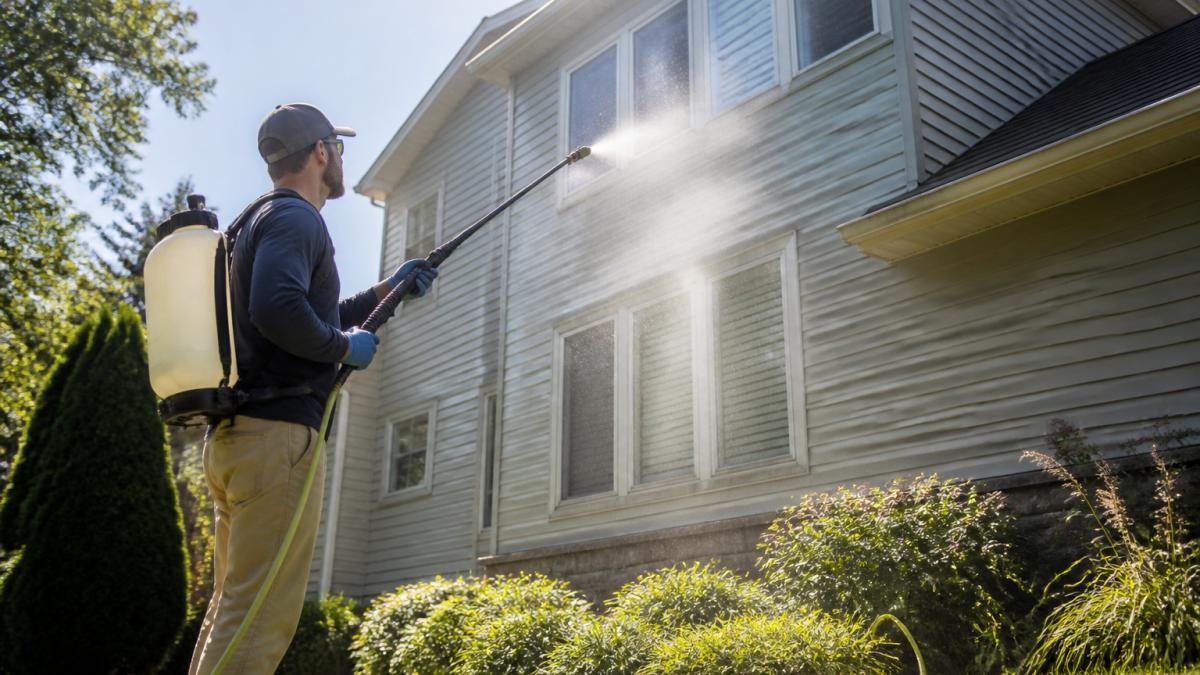
- Inspect and protect. We check for damaged siding, loose shingles, and nearby plants. Landscaping gets covered or pre-wetted.
- Mix the solution. The cleaning mixture is adjusted for the surface. Delicate materials get a milder blend.
- Apply at low pressure. A pump sprayer or low-pressure system coats the surface evenly from the bottom up.
- Let it dwell. The solution needs time to kill organic growth. Rushing this step is the most common mistake.
- Rinse with care. A gentle rinse washes away dead growth, dirt, and leftover solution.
- Check the results. We walk the property and re-treat stubborn spots before packing up.
A common mistake we see from DIY attempts: skipping the dwell time. Spraying and immediately rinsing leaves the algae alive. It grows back within weeks.
Soft Washing vs Pressure Washing: What’s the Difference?
The difference comes down to pressure and purpose. Pressure washing uses high-PSI water to blast away dirt and grime. Soft washing uses low pressure and chemical solutions to treat organic growth.
| Feature | Soft Washing | Pressure Washing |
|---|---|---|
| Pressure level | Low, under 100 PSI | High, often 2,000+ PSI |
| Main tool | Chemical solution | Water force |
| Best for | Roofs, siding, stucco, painted wood | Concrete, driveways, brick |
| Risk of damage | Low on delicate surfaces | High if misused |
| How it cleans | Kills and removes growth | Blasts away debris |
Pressure washing has its place. Driveways and paver walkways often need the extra force. But for a shingle roof or painted siding, high pressure can cause real damage. That’s the trade-off most guides skip: the right method depends entirely on the surface, not on which one sounds stronger.
The Soft Wash Cleaning Solution: What’s in the Mix?
A soft wash cleaning solution is a blend of water, detergent, surfactant, and a growth-killing agent, usually a diluted sodium hypochlorite mix or an eco-friendly alternative. The surfactant helps the solution cling to surfaces instead of running off. The detergent lifts dirt. The active ingredient kills algae, mold, and bacteria.
Chemical concentrations matter. Too strong, and you risk damage to plants and certain materials. Too weak, and the growth survives. Mixtures are adjusted for each surface:
- Roof shingles: milder blend, longer dwell time
- Painted siding: moderate strength, careful rinsing
- Concrete and pavers: stronger mix is usually safe
- Delicate surfaces: eco-friendly cleaning agents preferred
Dwell time is the other half of the equation. The solution needs to stay wet long enough to kill the organism, but not so long that it dries on the surface.
Material compatibility matters. Sodium hypochlorite can corrode certain metals, discolor some paints, and damage plants if it runs off untreated, so landscaping and sensitive surfaces need protection.
Never mix sodium hypochlorite with ammonia or acid-based cleaners. The reaction can release toxic gas. Professionals keep chemicals separate, label every container, and wear appropriate PPE.
Rinsing plants before and after application protects landscaping. That step is not optional. It’s part of doing the job right.
Professional Roof Soft Washing: Safe Removal of Algae and Mildew
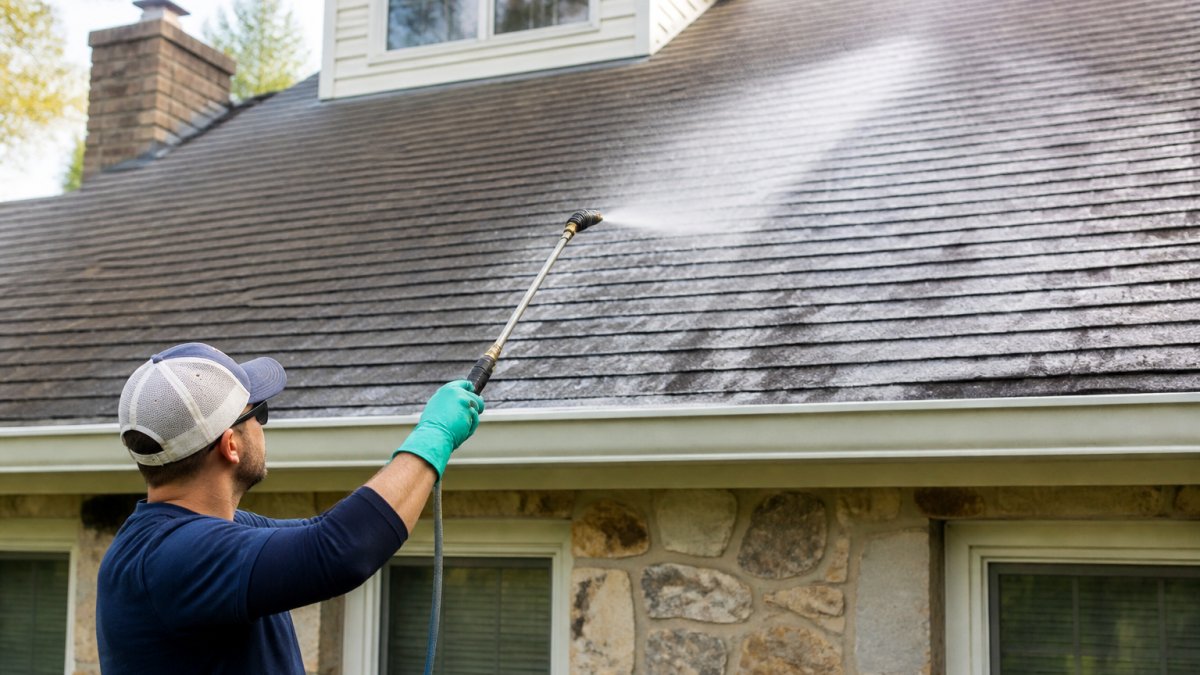
Roof soft washing is the safest way to remove the black streaks that algae and mildew leave behind. Those streaks are not just cosmetic. Organic growth holds moisture against shingles and shortens roof life. Left alone, it spreads.
High pressure on a roof is a bad idea. It can strip granules off asphalt shingles and void manufacturer warranties. Soft washing treats the growth without touching the shingle surface with force. The solution goes on, dwells, and rinses clean.
If your roof is showing streaks, you can see roof cleaning service plans and get a free estimate to understand what treatment fits your home. Waiting rarely helps. Algae spreads faster in warm, humid weather, and the longer it sits, the more it works into the material.
How Long Does Soft Washing Last?
Soft washing results typically last one to three years on roofs, depending on climate, shade, and tree cover. Siding and gutters often stay clean for a year or more. Driveways and pavers may need attention sooner because foot traffic and stains build up faster.
Several things shorten the lifespan of a cleaning:
- Heavy shade that keeps surfaces damp
- Overhanging trees dropping debris
- High humidity with little airflow
- Skipping the rinse step during application
The good news: because soft washing kills growth at the source, results usually outlast a pressure wash on the same surface. Pressure washing removes what’s visible. Soft washing removes what’s growing.
DIY vs Professional Soft Washing: What You Need to Know
DIY soft washing is possible, but the margin for error is wider than most homeowners expect. Mixing chemicals wrong can damage siding or harm plants. Applying from a ladder adds real risk. And without the right dwell time and rinse, the growth comes back.
Professional soft washing can bring correct chemical mixtures, proper safety gear, and insurance coverage. That last one matters. If something goes wrong on your property, an uninsured contractor leaves you holding the bill. Before hiring anyone, it’s worth knowing how to verify roof cleaning insurance in 7 steps so you’re not caught off guard.
Here’s our honest take: small, low-risk surfaces like a single walkway are fine to try yourself. Roofs, two-story siding, and anything near delicate landscaping are better left to a pro.
What separates a professional job from a DIY attempt is not just the equipment, it’s the process around the cleaning.
Quotes depend on the details of each property, including the size of the surface, the type of material, and the condition of the growth. For current pricing or a quote for your property, contact JJ’s Elite Softwash directly.
A fair professional quote reflects inspection, site protection, correct chemistry, controlled dwell and rinse, and a final check, not just the visible cleaning. Ask what is included before you compare numbers.
For a homeowner weighing the two paths, DIY may suit small, low-risk, ground-level surfaces where a mistake is cheap to fix. Roofs, multi-story siding, and anything near delicate landscaping are generally better left to a professional.
Get a Free Estimate for Professional Soft Washing
The best way to know what your property needs is a walkthrough from someone who does this every day. Every home is different, and the right approach depends on your surfaces, your growth problem, and your goals.
At JJ’s Elite Softwash, we’re locally owned and fully insured. We use safe, damage-free soft washing techniques on roofs, gutters, driveways, pool cages, and pavers. And we show up when we say we will, because we know how frustrating it is when contractors don’t.
If you’re ready to see what a professional soft wash would involve for your home, you can learn what to expect when requesting a free exterior cleaning quote. When you’re ready to move forward, reserve a service and pick a time that works for you.
Frequently Asked Questions
What is professional soft washing, and how is it different from pressure washing?
Professional soft washing is a low-pressure exterior cleaning method that relies on specialized cleaning solutions to kill and remove organic growth like algae, mold, and mildew. Unlike pressure washing, which uses high PSI water to blast away dirt, soft washing uses low pressure combined with cleaning agents. This makes it a gentler option for delicate surfaces such as roofs, siding, and painted wood, where high pressure can cause damage.
How long does soft washing last?
Soft washing results depend on your local climate and the amount of organic growth. The cleaning solution kills algae and mold at the root, so regrowth is slower than with pressure washing alone.
Is professional soft washing safe for roofs and siding?
Soft washing uses low pressure, which avoids the gouging and cracking that high-pressure washing can cause. The cleaning solution must be properly diluted and rinsed to prevent damage to plants and surfaces. For guidance on your specific roofing and siding materials, contact JJ’s Elite Softwash.
What should I expect when hiring a soft washing company?
When hiring a soft washing company, ask for proof of insurance and check reviews. JJ’s Elite Softwash offers a free estimate, and you can contact us to learn what to expect for your property.
Your exterior takes a beating from sun, rain, and organic growth all year. A proper soft wash stops the damage and brings back the curb appeal. Get started with JJ’s Elite Softwash and get a free estimate for safe, damage-free exterior cleaning that keeps your property looking its best.

