

Last Updated: October 28, 2026
Quick Summary
How to safely remove oxidation from aluminum pool cages means using a mild neutral cleaner (pH 6-8) on the chalky white film, not an acidic brightener or high-pH bleach that attacks the paint. Work in shade, keep dwell times short, rinse thoroughly, and never mix bleach with acid or ammonia cleaners.
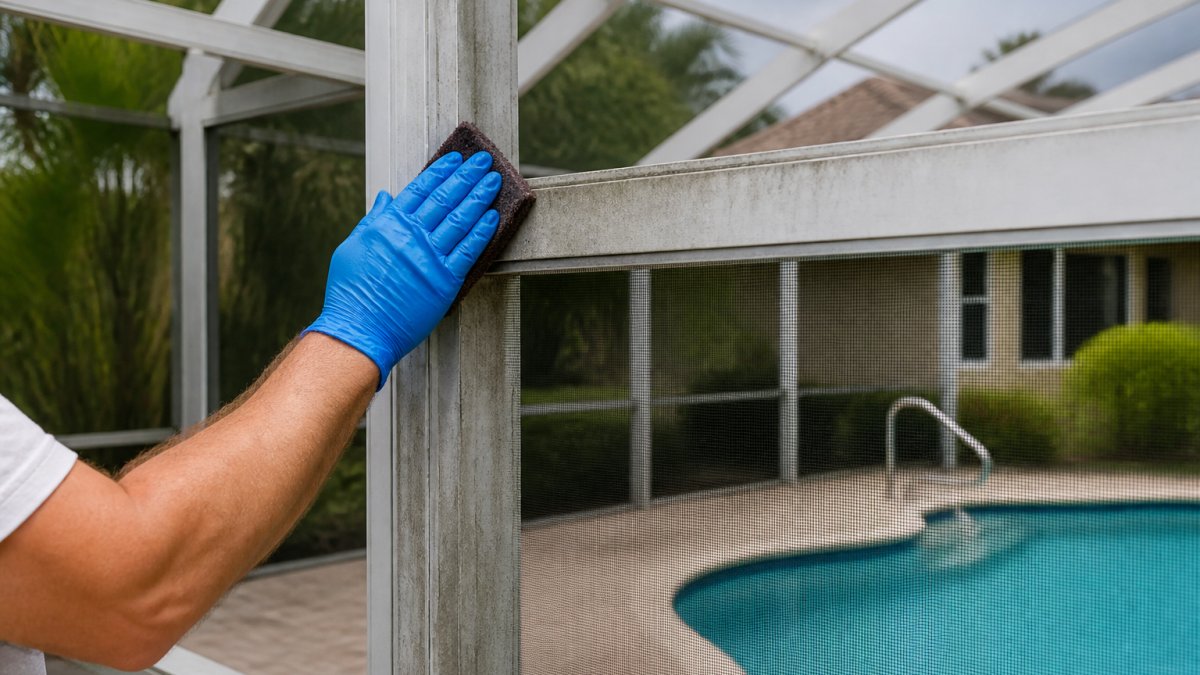
- Rub a clean white cloth on the frame: a chalky white residue confirms oxidation.
- Acidic brighteners and high-pH cleaners both damage painted aluminum frames.
- Never mix bleach with an acid or ammonia cleaner because it releases chlorine gas.
- Keep pressure under 1,500 PSI on painted aluminum and use only a 40-degree nozzle.
- Rinse the frame and screens monthly with a hose to help prevent oxidation from returning.
Table of Contents
- How to Tell Oxidation From Dirt, Algae, and Paint Failure
- Choosing an Aluminum Oxidation Remover That Won’t Eat the Finish
- Step-by-Step: Applying Cleaner and Scrubbing the Frame
- Pool Enclosure Screen Cleaning Without Tearing or Stretching
- Pressure Washing Pool Cage Limits: Settings and Nozzles
- Rinsing, Fasteners, Tracks, and Post-Cleaning Protection
- Pool Cage Cleaning and Maintenance: A Schedule That Prevents Return Oxidation
- When Oxidation Is Permanent: Repainting and Professional Repair
- Frequently Asked Questions
How to Tell Oxidation From Dirt, Algae, and Paint Failure
How to safely remove oxidation from aluminum pool cages starts with knowing that oxidation is a chemical change in the aluminum itself, not a layer of grime sitting on top of it. When the protective coating on a painted aluminum frame breaks down, oxygen attacks the metal underneath and leaves a chalky white film that no amount of scrubbing will rinse away.
That distinction matters because the fix is completely different for each problem.
Here is how to tell them apart before you touch a brush:
- Dirt: wipes off on a white rag and rinses clean with water.
- Algae: green or black streaks, usually on the shaded side, that feel slimy.
- Oxidation: a fine white powder that comes off on your finger but returns within days.
- Paint failure: visible cracking, peeling, or exposed bare metal under the chalk.
The White Chalk Test and Other Quick Checks
The fastest test is the white chalk test. Rub a clean white cloth along the frame with light pressure. If the cloth picks up a white, powdery residue that looks like chalk dust, you are dealing with oxidation.
Two more checks help confirm it:
- Spray a small patch with plain water. Dirt darkens and runs. Oxidation stays chalky.
- Press a piece of clear tape on the frame and peel it off. A white film on the tape means surface breakdown.
Watch out: if you see bare metal or flaking paint, stop. Cleaning will not fix a failing coating, and scrubbing makes it worse.
Choosing an Aluminum Oxidation Remover That Won’t Eat the Finish
Oxidation on a painted aluminum pool cage is aluminum oxide (Al₂O₃), a chalky, basic compound that forms when the protective coating fails and oxygen reaches the metal. The right cleaner dissolves or lifts that oxide without attacking the paint film or the aluminum beneath it. The wrong cleaner does the opposite: it strips what little coating remains and accelerates the next round of oxidation.
The key variable is pH. Aluminum is amphoteric, meaning it reacts with both strong acids and strong bases. That is why the two most common hardware-store mistakes, acidic “aluminum brighteners” and high-concentration bleach, both damage painted frames.
- Acidic brighteners (hydrofluoric acid, phosphoric acid, oxalic acid blends): These are formulated for bare aluminum and will dull, etch, or stain painted surfaces. They also attack concrete and can pit the aluminum if dwell time runs long. Skip them unless the frame is unpainted bare metal.
- High-pH cleaners (sodium hydroxide, high-ratio bleach): Caustic cleaners saponify the paint binder and cause chalking, gloss loss, and eventual peeling. Bleach at typical outdoor-cleaner ratios is usually acceptable on painted aluminum for short dwell times, but concentrated bleach or bleach left to dry will degrade the coating.
- Mild neutral cleaners (pH 6-8): Dish soap, car-wash soap, and dedicated aluminum oxidation removers labeled safe for painted surfaces sit in this range. They lift chalk and grime without reacting with the paint or the metal.
Never mix bleach with an acid cleaner (the CDC). The reaction releases chlorine gas, which is dangerous in an enclosed pool cage. Never mix bleach with ammonia-based cleaners either. Use one product at a time, rinse between, and read the SDS before you open the bottle.
If you are weighing a DIY approach against professional help, our frequently asked questions cover how pool cage cleaning works and what a free estimate involves.
Dilution, Dwell Time, and Patch Testing
Every product works on a ratio and a clock. Dilution means how much water you add. Dwell time is how long the cleaner sits before you rinse. Getting either wrong is the most common cause of DIY paint damage on pool cages.
Watch out: cleaner left to dry on a warm frame etches the paint. Work in shade or early morning, and keep the surface wet.
Step-by-Step: Applying Cleaner and Scrubbing the Frame
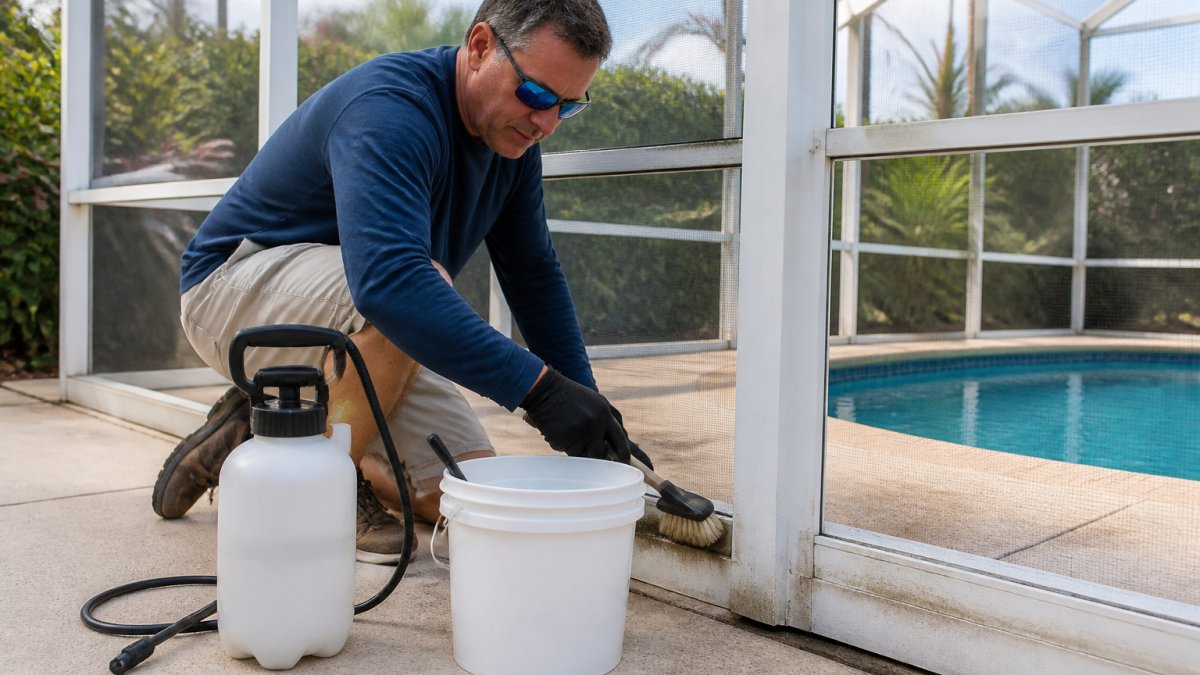
A common mistake is scrubbing hard in circles. That dulls the paint and pushes chalk into the seams. Light pressure, repeated passes, and patience win here.
Pool Enclosure Screen Cleaning Without Tearing or Stretching
- Rinse screens from the top down.
- Clean on a cool, overcast day so soap does not dry in the mesh.
- Check for tears before you start and note any you find.
Pressure Washing Pool Cage Limits: Settings and Nozzles
Pressure washing a pool cage is possible, but only with the right settings and a lot of restraint. This is soft washing territory, not blasting. The difference between a clean frame and a damaged one comes down to three variables: pressure (PSI), flow (GPM), and nozzle orifice size, and most homeowners only think about the first one.
Understanding PSI, GPM, and Nozzle Orifice Size
- Nozzle color codes follow a standard: red (0°), yellow (15°), green (25°), white (40°), and black (soap/low pressure). For painted aluminum and screens, use only a white 40-degree nozzle or a black soap nozzle.
- Orifice size matters as much as angle. A 40-degree nozzle with a small orifice still concentrates too much force. Match the orifice to your machine’s GPM, most manufacturers publish a nozzle chart, and size up (larger orifice) when in doubt.
- Distance is a multiplier. Pressure at the surface drops roughly with the square of the distance from the tip. Holding the wand 12 inches away versus 6 inches cuts surface pressure to roughly a quarter, which is why distance is your first safety control.
The Rules We Follow
- Keep pressure under 1,500 PSI on painted aluminum. If your machine cannot be dialed down, do not use it on the frame.
- Use a wide 40-degree soft-wash nozzle, never a pinpoint tip. A 0-degree or 15-degree tip will pit metal, strip paint, and shred screen mesh at close range.
- Hold the wand at least 12 inches from the surface, and increase distance near seams, fasteners, and screen panels.
- Keep the stream moving, and never aim at screens, seams, or fasteners. A stationary stream cuts a line into paint in seconds.
- Never aim at screen panels at all. Screen mesh is designed to hold wind load, not point pressure. Even a 40-degree tip at close range will stretch or tear spline-held mesh.
Verifying Your Machine’s Actual Output
If you are unsure about your machine’s output, skip it. A garden hose and a brush do the job with zero risk. Soft washing, low pressure with a chemical application and a rinse, is the standard approach for pool cages precisely because it removes oxidation and biological growth without the surface damage that high pressure causes.
Rinsing, Fasteners, Tracks, and Post-Cleaning Protection
- Flush door tracks until the water runs clear.
- Wipe rollers dry and check they still glide.
- Clear drainage holes so water does not pool on the frame.
Pool Cage Cleaning and Maintenance: A Schedule That Prevents Return Oxidation
| Frequency | Task | Time Needed |
|---|---|---|
| Monthly | Rinse frame and screens with a hose | 15 minutes |
| Quarterly | Mild soap wash of frame and screens | 1 hour |
| Twice a year | Full clean plus surface protectant | 2 to 3 hours |
| Annually | Inspect fasteners, tracks, and paint | 30 minutes |
When Oxidation Is Permanent: Repainting and Professional Repair
This is where we come in. JJ’s Elite Softwash uses safe, damage-free soft washing to clean pool cages and exterior surfaces. We are locally owned, fully insured, and we treat every home like our own.
If you are ready to stop guessing, contact us to talk through your enclosure, or get a free quote for exterior cleaning and see exactly what the process involves. You can also review our full range of services for pool cages, roofs, gutters, and pavers.
Frequently Asked Questions
What is the best aluminum oxidation remover for pool cages?
There is no single best product for every cage. Look for a cleaner labeled for oxidized aluminum or painted aluminum, and check that it does not contain acid or lye strong enough to dull the finish. Test it on a small hidden section first: apply, wait the labeled dwell time, and rinse. If the white chalky film lifts without streaking the paint, it is safe to use on the rest of the frame. Avoid abrasive metal polishes on painted frames.
Can pressure washing damage an aluminum pool cage?
Yes, if the pressure is too high or the nozzle is too close. Aluminum frames are thin and painted, and a narrow tip can strip paint, bend screen splines, and force water behind fasteners. Keep a pressure washing pool cage job on a wide fan tip, stay at least 12 to 18 inches from the surface, and never aim directly at the screens. Soft washing with low pressure and a cleaning solution is safer for the frame and the enclosure.
How often should you clean an aluminum pool cage?
Most pool cages need a light cleaning every three to six months, and a deeper clean once a year. Homes near trees, irrigation sprinklers, or coastal air may need it more often. Regular pool cage cleaning and maintenance stops dirt and algae from holding moisture against the aluminum, which is what speeds up oxidation. A quick rinse of the frame and pool enclosure screen cleaning between deeper washes also helps.
Can vinegar remove oxidation from aluminum?
Vinegar can lift light surface oxidation, but it is not a reliable fix for a chalky, advanced case. It is acidic, and leaving it on painted aluminum too long can dull the coating. If you try it, mix equal parts white vinegar and warm water, apply to a small test spot, scrub gently with a sponge, and rinse well. For heavy oxidation, a dedicated aluminum oxidation remover with a short dwell time is the safer choice.
Oxidation on a pool cage is a coating problem, not a dirt problem, and treating it that way is the difference between a clean frame and a damaged one. If your enclosure has moved past what a brush and a hose can fix, JJ’s Elite Softwash can help. Our soft washing approach protects the finish, our team is fully insured, and our locally owned crew shows up when we say we will. Get started with JJ’s Elite Softwash and get a free estimate for your pool cage today.

